February 23, 2022— Engseng Ho — Dubai and Singapore: Asian Diasporics, Global Logistics, Company Rule

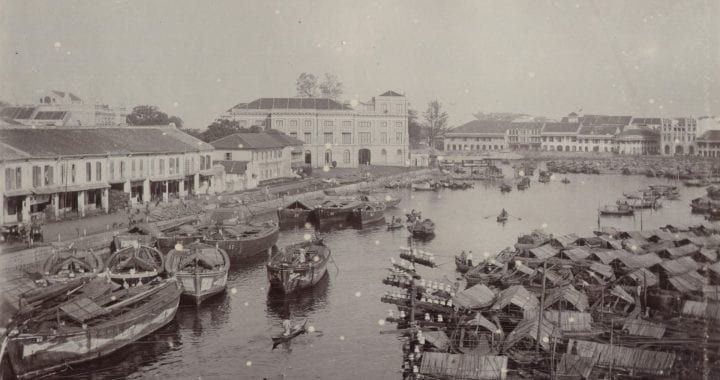
Dubai and Singapore are emblematic of the contemporary global moment, embodying dizzying success, frenetic excess, spectacular crash. Are they global cities or port-states? Are they Asian nations or corporations descended from the East India Companies that became colonial governments? Their iconic status today as global cities is not simply a function of globalization, but can be understood in terms of dynamic currents that shape and reshape places in the Indian Ocean, the original Asian venue of an international economy. Dubai and Singapore are two tiny places that have seen success because they have understood those currents, and acted in accordance with changes in their dynamics. What are these dynamics – their constants over the long term, and their recent shifts?

Engseng Ho is a professor of Anthropology and History at Duke University. He is also the Muhammad Alagil Distinguished Visiting Professor of Arabia Asia Studies at the Asia Research Institute, National University of Singapore. He is a leading scholar of transnational anthropology, history and Muslim societies, Arab diasporas, and the Indian Ocean. His research expertise is in Arabia, coastal South Asia and maritime Southeast Asia, and he maintains active collaborations with scholars in these regions. He is co-editor of the Asian Connections book series at Cambridge University Press, and serves on the editorial boards of journals such as American Anthropologist, Comparative Studies in Society and History, History and Anthropology. He has previously worked as Professor of Anthropology, Harvard University; Senior Scholar, Harvard Academy for International and Area Studies; Country and Profile Writer, the Economist Group; International Economist, Government of Singapore Investment Corporation/Monetary Authority of Singapore; Director, Middle East Institute, National University of Singapore. He was educated at the Penang Free School, Stanford University, and the University of Chicago.

Date | Time
February 23, 2022| 12:15 – 1:30 PM [PST]

RSVP by 11 AM on Wednesday, February 23rd; you will receive the Zoom link and password at 11:30 AM the day of the colloquium.

Please note: this event will be entirely remote, with no in-person attendance.

To RSVP for the entire Winter 2022 series, please fill out this form.

This event is co-sponsored by SEACoast (Center for Southeast Asian Coastal Interactions)
March 2, 2022— Mark Nash and Vladimir Seput — Documenta 11 revisited: Platform 6

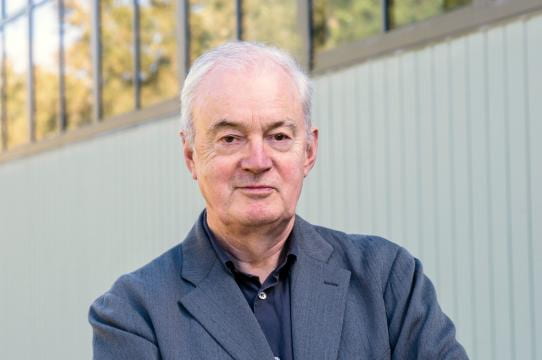
Following the untimely death in 2019 of curator Okwui Enwezor, Mark Nash was charged with developing a platform for exploring the work of Enwezor’s Documenta11 (2002) for which Mark was a co-curator. This talk will present several related projects including the Platform 6 website. Vladimir Seput, who is visiting scholar at UCSC, is collaborating on the Platform 6 project and will also contribute to the presentation.

Mark Nash is a distinguished independent curator, film historian and filmmaker with a specialization in contemporary fine art moving image practices, avant-garde and world cinema. He is currently a professor at the University of California, Santa Cruz, where he founded the Isaac Julien Lab with his partner and long-time collaborator, Isaac Julien. Nash has taught at Birkbeck College, University of London; the Whitney Museum Independent Study Program; New York University; Harvard University; Nanyang Technological University of Singapore’s Centre for Contemporary Art; and the Royal College of Art in London. As a curator, Nash has collaborated with Isaac Julien on numerous film and art projects. He also collaborated regularly with the late Okwui Enwezor, including on Documenta11, on The Short Century: Independence and Liberation Movements in Africa, 1945–1994, and most recently on The Arena project at the Venice Biennial 2015 which featured an epic live reading of Karl Marx’s Das Kapital. In addition to his curatorial work, Nash edited and contributed a critical introduction to Red Africa: Affective Communities in the Cold War.

Date | Time
March 2, 2022 | 12:15 – 1:30 PM [PST]

RSVP by 11 AM on Wednesday, March 2nd; you will receive the Zoom link and password at 11:30 AM the day of the colloquium.

To RSVP for the entire Winter 2022 series, please fill out this form.

Winter 2022 Colloquium Series

THE CENTER FOR CULTURAL STUDIES hosts a weekly Wednesday colloquium featuring work by faculty & visitors. 

We are pleased to announce our Winter 2022 Series. We have missed the intimacy, energy, and sense of community provided by gathering in person. However, we realize some of you may not be coming to campus regularly, and a number of challenges remain in holding in-person events on campus. To maximize accessibility for audience members, the CCS colloquium series will have a hybrid format, meaning that you will have the option of attending in person in Humanities 210 or remotely via Zoom. Those who attend in person must adhere to the campus mask mandate for all indoor activities and must complete a symptom-check form before coming to campus. To attend remotely via Zoom, please RSVP in advance and you will receive a Zoom link on the morning of the colloquium. Speakers will appear remotely so that they do not have to wear a mask when presenting.

Please RSVP to either all colloquia here or select the individual event you would like to RSVP for here on our website. The Zoom link will be circulated at 11:30 AM on the day of the colloquium. Please be online by 12:10 PM [PST] if you are attending remotely. Sessions begin promptly at 12:15 PM and end at 1:30 PM. Sessions will not be recorded.

January 12
Jean Beaman (UC Santa Barbara)
Suspect Citizenship

January 19
Caitlin Keliiaa (UCSC)
Occupational Risk: Sexual Surveillance and Federal Regulation of Native Women’s Bodies

January 26
Xavier Livermon (UCSC)
Safe Houses? Queerness, Performance, and the Land Question in South Africa

February 2
Massimiliano Tomba (UCSC)
Revolutions/Restorations

February 9
Jorgge Menna Barreto (UCSC)
Voicescapes for the Landless

February 16
Althea Wasow (UCSC)
Policing Blackness and Black Bodies in Bert Williams’s A Natural Born Gambler (1916)

February 23
Engseng Ho (Duke)
Dubai and Singapore: Asian Diasporics, Global Logistics, Company Rule

March 2
Mark Nash and Vladimir Seput
Documenta 11 revisited: Platform 6


Center for Cultural Studies Staff

Mayanthi Fernando & Marc Matera, co-Directors

Piper Milton, GSR (cult@ucsc.edu; Humanities 1, 428)


2021-2022 Advisory Board 

Gerald Casel (Theater Arts)

Yasmeen Daifallah (Politics)

Muriam Haleh Davis (History)

Gina Dent (Feminist Studies, History of Consciousness)

Nathaniel Deutsch (History)

Carla Freccero (History of Consciousness, Literature, Feminist Studies)

Deborah Gould (Sociology)

Peter Limbrick (Film & Digital Media)

Laurie Palmer (Art)

Savannah Shange (Anthropology)

Massimiliano Tomba (History of Consciousness)


Fall 2021 Colloquium Series

THE CENTER FOR CULTURAL STUDIES hosts a weekly Wednesday colloquium featuring work by faculty & visitors. 

We are pleased to announce our Fall 2021 Series. We have missed the intimacy, energy, and sense of community provided by gathering in person. However, we realize some of you may not be coming to campus regularly, and a number of challenges remain in holding in-person events on campus. To maximize accessibility for audience members, the CCS colloquium series will have a hybrid format, meaning that you will have the option of attending in person in Humanities 210 or remotely via Zoom. Those who attend in person must adhere to the campus mask mandate for all indoor activities and must complete a symptom-check form before coming to campus. To attend remotely via Zoom, please RSVP in advance and you will receive a Zoom link on the morning of the colloquium. Speakers will appear remotely so that they do not have to wear a mask when presenting.

Please RSVP to either all colloquia here or select the individual event you would like to RSVP for here on our website. The Zoom link will be circulated at 11:30 AM on the day of the colloquium. Please be online by 12:10 PM [PST] if you are attending remotely. Sessions begin promptly at 12:15 PM and end at 1:30 PM. Sessions will not be recorded.

October 13
Thomas Serres (UCSC)
Reflections on Abject Victimhood and the Impossibility of Post-Islamism: The Trajectory of the Rachad Movement

October 20
Radhika Natarajan (Reed College)
Post-Imperial Contractions: Asian Migration and Marriage in Deindustrializing Britain

October 27
Jennifer Steverson (Independent Scholar and Artist) + Naya Jones (UCSC)
The Art of Black Ecologies: A Virtual Studio Visit & Conversation

November 3
BuYun Chen (Swarthmore College)
Making the Intangible Tangible: Craft, History, and the Ryukyus

November 10
Lital Levy (Princeton University)
World Literature, Translation, and Diaspora: The Intimately Global Journey of Grace Aguilar’s The Vale of Cedars

November 17
Nasser Zakariya (UC Berkeley)
Questions on “Anthroperiphery”


Center for Cultural Studies Staff

Mayanthi Fernando & Marc Matera, co-Directors

Piper Milton, GSR (cult@ucsc.edu; Humanities 1, 428)


2021-2022 Advisory Board 

Gerald Casel (Theater Arts)

Yasmeen Daifallah (Politics)

Muriam Haleh Davis (History)

Gina Dent (Feminist Studies, History of Consciousness)

Nathaniel Deutsch (History)

Carla Freccero (History of Consciousness, Literature, Feminist Studies)

Deborah Gould (Sociology)

Peter Limbrick (Film & Digital Media)

Laurie Palmer (Art)

Savannah Shange (Anthropology)

Massimiliano Tomba (History of Consciousness)


October 13, 2021 — Thomas Serres — Reflections on Abject Victimhood and the Impossibility of Post-Islamism: The Trajectory of the Rachad Movement

This presentation looks at the trajectory of former Algerian Islamists belonging to the opposition movement Rachad, who denounce state exactions perpetrated during the civil war of the 1990s. In so doing, the talk focuses on the notion of “abject victimhood,” to think about the legal and political challenges faced by actors once associated with an Islamist insurgency. Moreover, it shows how the production of abjection and that of victimhood are both entangled and conflicting, as the former serves to restore state power, while the latter supports revolutionary claims. This discussion also questions the possibility of a genuine form of “post-Islamism” in a context characterized by the impunity of state actors and the impossibility for those associated with political Islam to escape the vilifying discourses associated with counter-terrorism. This event is co-sponsored by the Center for the Middle East and North Africa (CMENA) at UCSC.

Thomas Serres is an Assistant Professor in the Politics department at UCSC. His research spans the field of Middle Eastern studies, critical security studies and comparative politics, and combines an ethnographic approach with a conceptual apparatus inspired by critical theory. He is particularly interested in the effects of protracted and entangled crises (popular uprisings, “war on terror,” refugee crisis, neoliberalization) in North Africa and beyond. His first book, entitled The Suspended Disaster: Governance by Catastrophization in Bouteflika’s Algeria, studies Algerian politics as a system of governance based on the management of a seemingly never-ending crisis and the systematic endangerment of the political order. An updated and expanded version of this book is currently under contract with Columbia University Press, after the French version was published with Karthala in 2019. Thomas has also published articles in peer-reviewed journals such as Middle East Critique, Interdisciplinary Political Studies and L’Année du Maghreb. Lastly, he has also co-edited a volume entitled North Africa and the Making of Europe: Governance, Institutions, Culture, which was published by Bloomsbury Academic Publishing in 2018.

Date | Time
October 13, 2021 | 12:15 – 1:30 PM [PST]

RSVP by 11 AM on Wednesday, October 13th; you will receive the Zoom link and password at 11:30 AM the day of the colloquium.

To RSVP for the entire Fall 2021 series, please fill out this form.

October 20, 2021 — Radhika Natarajan — Post-Imperial Contractions: Asian Migration and Marriage in Deindustrializing Britain

The talk explores how Asian women became unassimilable in social work and public discourse in 1970s Britain. In the context of decolonization and deindustrialization, the Pakistani woman who worked for wages posed a threat to the stability of the white male working class. To keep the Pakistani woman at home, social workers created new forms of intervention into marriages, offered English language classes to mothers at day care centers, and extended the hand of friendship. From this perspective, multiculturalist policies created Asian women as non-workers who needed extensive social welfare intervention. In doing so, these policies reproduced the working class as male and white and the Asian woman as trapped by tradition.

Radhika Natarajan is assistant professor of history and humanities at Reed College in Portland, OR. Her research focuses on the remaking of imperial strategies of managing difference during decolonization. Her article “Performing Multiculturalism: the Commonwealth Arts Festival of 1965” appeared in the Journal of British Studies, and she has also written essays on the transcolonial routes of community development and British social work intervention into Asian marriages. She is writing a book, Empire and the Origins of Multiculturalism, which examines encounters between British social work and migrants from the decolonizing empire during the era of the welfare state.

Date | Time
October 20, 2021 | 12:15 – 1:30 PM [PST]

RSVP by 11 AM on Wednesday, October 20th; you will receive the Zoom link and password at 11:30 AM the day of the colloquium.

To RSVP for the entire Fall 2021 series, please fill out this form.

October 27, 2021 — Jennifer Steverson + Naya Jones — The Art of Black Ecologies: A Virtual Studio Visit & Conversation

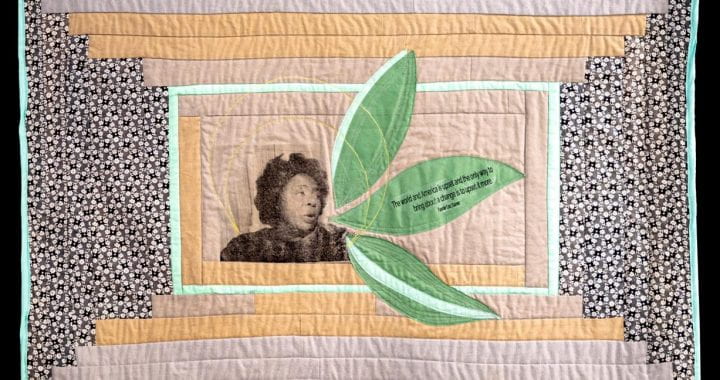
The concept of black ecologies underscores the undue impact of climate and environmental injustice on Black diaspora communities while lifting up “insurgent” Black ecological knowledge (Roane & Hosbey 2019). Join us for a virtual studio visit and conversation on art and black ecologies with independent scholar and artist Jennifer Steverson. Steverson uses indigo dye, textiles, and archives to highlight Black diaspora community and resilience practices created through art, craft, and agriculture. She will be in conversation with arts-based geographer Naya Jones (UCSC Sociology). This event is moderated by the UCSC Black Geographies Lab and is part of the growing Black Botany Studio.


 Jennifer Steverson (she/her/hers) is an independent scholar and multi media artist based in Central Texas. Her work is informed by the cultural ecologies of the African Diaspora, specifically by the way that Black people have crafted community and resilience practices through art, craft, and agriculture. She completed her undergraduate work at Eugene Lang College, a division of the New School and her masters degree in Community and Regional Planning at UT Austin. Jennifer was a Hive Collective Artist in Residence in 2019. In 2020, she completed a Texas Folklife Apprenticeship focused on quilting. She was a researcher on the Carver Museum’s African American Presence exhibit which opened in February 2020. Her work has appeared in the Rootwork Journal.


 Naya Jones (she/her/hers) is a UCSC Assistant Professor of Sociology and Core Faculty in the Global and Community Health Program. She is a geographer and cultural worker whose solo and collaborative work foregrounds Black geographies of health, ecologies, and healing in North and Latin America. She practices arts-based methods, from participatory film to ritual and botanical arts. Her current book and storytelling project focuses on African-American plant knowledge and the Great Migration. She initiated the Black Botany Studio, a research lab, to promote the study and art of black diaspora plant geographies.


Date | Time
October 27, 2021 | 12:15 – 1:30 PM [PST]

RSVP by 11 AM on Wednesday, October 27th; you will receive the Zoom link and password at 11:30 AM the day of the colloquium.

To RSVP for the entire Fall 2021 series, please fill out this form.

November 3, 2021 — BuYun Chen — Making the Intangible Tangible: Craft, History, and the Ryukyus

How did the global and regional circulation of resources, techniques, and technologies transform local ecologies, practices, and livelihoods? Located between the East China Sea and the Pacific Ocean, the Ryukyu Kingdom (?-1879; modern-day Okinawa, Japan) was a vital entrepôt in the early modern world, facilitating the movement of goods and people between northeast Asia and southeast Asia. This talk situates craft practices and material knowledge at the center of Ryukyu history to explore the historical entanglements of materials, bodies, and skills in the making and remaking of culture.

BuYun Chen is Associate Professor of Asian history at Swarthmore College. She is the author of Empire of Style: Silk and Fashion in Tang China (University of Washington Press, 2019). Her current research explores the relationship between craft production, statecraft practices, and ecological change in the independent Ryukyu Kingdom (modern-day Okinawa, Japan) from the seventeenth to nineteenth centuries.

Date | Time
November 3, 2021 | 12:15 – 1:30 PM [PST]

RSVP by 11 AM on Wednesday, November 3rd; you will receive the Zoom link and password at 11:30 AM the day of the colloquium.

To RSVP for the entire Fall 2021 series, please fill out this form.

November 10, 2021 — Lital Levy — World Literature, Translation, and Diaspora: The Intimately Global Journey of Grace Aguilar’s The Vale of Cedars

This talk follows the translation history of the Anglo-Jewish author Grace Aguilar’s 1850 novel The Vale of Cedars from Victorian England to Mainz, Warsaw, Vilna, Calcutta, and Tunis. A case study for my broader project on “Global Haskalah,” it brings together Sephardic studies, world literature and translation studies, transnational literary history, and Jewish literary studies. Through this project, I argue for two interventions: a rethinking of the nation-centered model of world literature, and a revision of the Eurocentric narrative of the Haskalah (Jewish Enlightenment). The novel’s history begins with a work of minor literature by a Sephardic Englishwoman about a quintessential minority topic: crypto-Jews in the Spanish Inquisition. Originally intended as a refutation of English conversionists, by the end of the century the novel had appeared in multiple free translations into Hebrew, Yiddish, and Judeo-Arabic, refashioned to instill their readers with pride in historical Jewish nobility and martyrdom. In addition to mapping the book’s journey and elucidating the cultural markers of its myriad translations, the talk will foreground the Calcutta Judeo-Arabic edition and its social-historical context. This presentation is co-sponsored by The Center for the Middle East and North Africa (CMENA) at UCSC.

Lital Levy is Associate Professor of Comparative Literature at Princeton University, where she teaches comparative literature and theory, Hebrew literature, Arabic literature, and Jewish studies. Her work integrates literary and cultural studies with intellectual history and religious thought. She is the author of Poetic Trespass: Writing between Hebrew and Arabic in Israel/Palestine (Princeton University Press, 2014), which won the MLA Prize for a First Book and awards from the AAJR and AJS. She is currently completing The Jewish Nahda, an intellectual history of Arab Jews and modernity.

Date | Time
November 10, 2021 | 12:15 – 1:30 PM [PST]

RSVP by 11 AM on Wednesday, November 17th; you will receive the Zoom link and password at 11:30 AM the day of the colloquium.

To RSVP for the entire Fall 2021 series, please fill out this form.

November 17, 2021 — Nasser Zakariya — Questions on “Anthroperiphery”

Taking recent discussions of “Copernican Forecasting” as a point of departure, this talk will look to historical and probabilistic arguments representing science in terms of ongoing demonstrations of the increasingly marginal position of humanity. A sketch of some of the genealogies of these arguments and their representations suggest how ill-fitting they might be when set against varying historical conceptions of centrality, probability, and forecasting.

Nasser Zakariya is an Associate Professor in the Department of Rhetoric at UC Berkeley. His doctorate is in history of science, with a secondary field in Film and Visual Studies. His research interests concern science and narrative, as well as varied topics in the history and philosophy of science. He has taught and held research fellowships at a number of institutions, including the Max Planck Institute for the History of Science and New York University Tandon School of Engineering (formerly Polytechnic Institute of NYU).

Date | Time
November 17, 2021 | 12:15 – 1:30 PM [PST]

RSVP by 11 AM on Wednesday, November 17th; you will receive the Zoom link and password at 11:30 AM the day of the colloquium.

To RSVP for the entire Fall 2021 series, please fill out this form.