
April 7, 2021 — Ben Kafka — The Effort to Drive the Other Person Crazy

What does it mean to be driven crazy? By a parent, a professor, a president, perhaps even the internet itself? In 1959 the psychoanalyst Harold Searles published a paper in The British Journal of Medical Psychology, “The Effort to Drive the Other Person Crazy: An Element in the Aetiology and Psychotherapy of Schizophrenia.” “My clinical experience,” he wrote, “has indicated that the individual becomes schizophrenic partly by reason of a long-continued effort, a largely or wholly unconscious effort, on the part of some person or persons highly important in his upbringing, to drive him crazy.” This talk will consider Searles’s thesis and its implications for our understanding of mental life. It will argue that, while it may not be a very good explanation for schizophrenia, it nevertheless offers us new opportunities to think about our relations to media, culture, and one another.

Ben Kafka is an Associate Professor of Media, Culture, and Communication at New York University. He is also a psychoanalyst in private practice. He is the author of The Demon of Writing: Powers and Failures of Paperwork (Zone Books, 2012) and co-editor, with Francesco Pellizzi and Stefanos Geroulanos, of The Problem of the Fetish: William Pietz’s Lost Manuscript (University of Chicago Press, 2022). He is currently working on a book about gaslighting, folies-à-deux, double binds, Catch-22s, and other forms of induced insanity.

Date | Time
April 7, 2021 | 12:15 – 1:30 PM [PST]
This colloquium is co-sponsored by the History Department.

RSVP by 11 AM on Wednesday, April 7th; you will receive the Zoom link and password at 11:30 AM the day of the colloquium.

To RSVP for the entire Spring 2021 series, please fill out this form.

April 14, 2021 — Rebecca Hernandez — Categories, Identities, and Objects: Naming Native Art

This presentation will examine the inherent complexities in the academic study and public representation of American Indian culture(s), and how the categorization and defining of Native American objects aids in the construction of American Indian identity.

Rebecca Hernandez is currently the Director of the American Indian Resource Center at UC Santa Cruz, where she is focused on the retention of Native students and developing programs that promote a better understanding of American Indian culture(s) and lifeways at UCSC. She has worked in university administration for 15 years and taught courses in universities and community colleges. Her PhD is in American Studies with a concentration in Native American Studies and Visual Culture. She also holds an MFA in Exhibition Design and Museum Studies.

Date | Time
April 14, 2021 | 12:15 – 1:30 PM [PST]

RSVP by 11 AM on Wednesday, April 14th; you will receive the Zoom link and password at 11:30 AM the day of the colloquium.

To RSVP for the entire Spring 2021 series, please fill out this form.


April 21, 2021 — Susan Lepselter — Left-Standing

Left-Standing is a performance of written and video poems. The video does not illustrate the writing; rather, the two media become an interconnected poetics. Together, these forms of poetry engage visual, aural, and affective dimensions of ordinary human encounters with the nonhuman world. The overall scenario presents encounters both with animals who wander a suburban neighborhood after a woods has been razed and developed, and with the trees, grasses, waters, and crops in the leftover woods and its surrounding farmlands. Lepselter’s presentation evokes a world at a moment of ecological, social, and epistemological precarity and continuity.

Susan Lepselter is Associate Professor of American Studies, and Adjunct Professor of Anthropology, Cultural Studies and Folklore, at Indiana University Bloomington. She takes an interdisciplinary approach to narrative and poetics in the United States, and has published work on UFO stories, conspiracy theories, dream narratives, and hoarding shows. She is currently completing a multimedia book of poetry supported by a New Frontiers award from Indiana University. Her book The Resonance of Unseen Things: Poetics, Power, Captivity and UFOs in the American Uncanny (University of Michigan Press, 2016) won the 2017 Society for Cultural Anthropology Bateson Prize.

Date | Time
April 21, 2021 | 12:15 – 1:30 PM [PST]

RSVP by 11 AM on Wednesday, April 21st; you will receive the Zoom link and password at 11:30 AM the day of the colloquium.

To RSVP for the entire Spring 2021 series, please fill out this form.
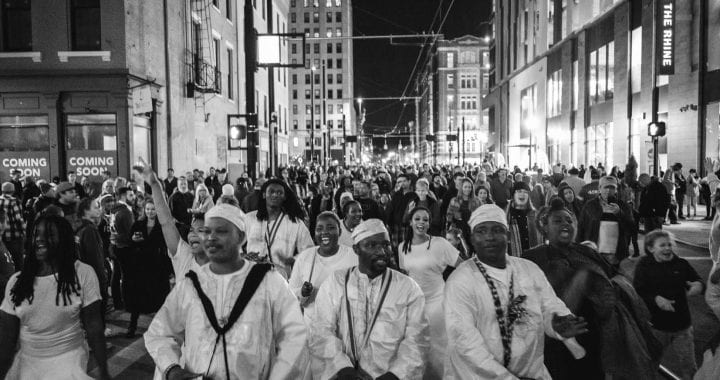
April 28, 2021 — Aimee Meredith Cox — Cosmic Cartographies // BodyStorming

This talk/participatory workshop will draw from the methods and theoretical orientation of two of Cox’s current projects. The first, Cosmic Cartographies, explores how people define and actualize strategies for Black liberation and is inspired by the ways in which a group of multigeneration Black women activists articulate their physical and psychic relationship to space in Cincinnati. The second, BodyStorm, tracks the social choreography, mobilities, gestures, ways of experiencing the body, and what we might even call dance techniques that are emerging in this time of intensified uncertainty and precarity, as a response to the present and, potentially, as a way of practicing for the future. Cox’s presentation and audience engagement will employ the embodied knowledge and relational techniques developed within and across both projects to explore our own capacities to access new ways of feeling, comprehending, and being in the world.

Aimee Meredith Cox is an anthropologist, writer, movement artist, and critical ethnographer. She is currently an Associate Professor in the Anthropology and African American Studies departments at Yale University. Aimee’s first monograph, Shapeshifters: Black Girls and the Choreography of Citizenship (Duke 2015), won the 2017 book award from the Society for the Anthropology of North America and a 2016 Victor Turner Book Prize in Ethnographic Writing. She is the editor of the volume Gender: Space (MacMillan, 2018). Aimee is also a dancer and choreographer. She performed and toured internationally with Ailey II and the Dance Theatre of Harlem and has choreographed performances as interventions in public and private space in Newark, Philadelphia, and Brooklyn. Aimee is currently working on two book projects based on ethnographic research among Black communities in Cincinnati, Ohio; Jackson, Mississippi; Clarksburg, West Virginia; and Bedford-Stuyvesant Brooklyn. This overall project is called “Living Past Slow Death.”

Date | Time
April 28, 2021 | 12:15 – 1:30 PM [PST]
This colloquium is co-sponsored by the Anthropology Department and the Critical Race and Ethnic Studies (CRES) program. 

RSVP by 11 AM on Wednesday, April 28th; you will receive the Zoom link and password at 11:30 AM the day of the colloquium.

To RSVP for the entire Spring 2021 series, please fill out this form.

May 5, 2021 — Larisa Jasarevic — Beekeeping in the End Times

A family of would-be migrants reenacts a swarm hunt at their former apiary in northeastern Bosnia. Their folk spells were well-attuned to the sorts of crises that tatter old human-apian ties, except the latest: extreme weather and emigration. Meanwhile, one tepid February, shepherds reflect on gratitude as their sheep graze by the growing coal-power plant. “The End is not yet,” they say. These are snapshots of what Jasarevic calls the quiets of disaster. Sharing a rough cut of a story from an ethnographic film, Jasarevic’s presentation concerns disaster ecology, Islamic eschatology, and ethnography as a homesteading craft.

Larisa Jasarevic is an independent scholar and a 2021 Wenner-Gren Fejos Fellow. An anthropologist, she has research interests in bodies and health, nature, and eschatology. A beekeeper and a homesteader, she is developing dread about multispecies climate futures. Her second book, Beekeeping in the End Times (IUP), is in preparation. She taught for a decade at the University of Chicago. 

Date | Time
May 5, 2021 | 12:15 – 1:30 PM [PST]

RSVP by 11 AM on Wednesday, May 5th; you will receive the Zoom link and password at 11:30 AM the day of the colloquium.

To RSVP for the entire Spring 2021 series, please fill out this form.

May 12, 2021 — Evren Savcı — Queer in Translation: Sexual Politics under Neoliberal Islam

Savcı will speak about her book Queer in Translation, which draws on the case of Turkey’s 16 years of AKP governance to intervene in Queer Studies’ separate — indeed, diagonically opposed — approaches to neoliberalism and to Islam. She theorizes “neoliberal Islam” as a unique regime that brings together economic and religious moralities to deploy marginality onto ever-expanding populations instead of concentrating it in the lower echelons of society, and she suggests that sexual liberation movements are the most productive places from which to theorize neoliberal Islam, as well as to imagine resistances to it. After an initial presentation, Savcı will then be in conversation with Mayanthi Fernando (UCSC).

Evren Savcı is Assistant Professor of Women’s, Gender and Sexuality Studies at Yale University. Her first book Queer in Translation: Sexual Politics under Neoliberal Islam (2021, Duke University Press) analyzes sexual politics under contemporary Turkey’s AKP regime with an eye to the travel and translation of sexual political vocabulary. Her second book project, tentatively entitled Failures of Modernization: Polygamy, Islamic Matrimony and Cousin Marriages in the Turkish Republic, turns to those sexual practices that were deemed “uncivilized” and either heavily discouraged or outlawed by the Turkish Republic. Savcı’s work on the intersections of language, knowledge, sexual politics, neoliberalism, and religion has appeared in Journal of Marriage and Family; Ethnography; Sexualities; Political Power and Social Theory; Theory & Event; Journal of Feminist Studies in Religion; GLQ, and in several edited collections.

Date | Time
May 12, 2021 | 12:15 – 1:30 PM [PST]
This colloquium is a joint event with the Center for the Middle East and North Africa (CMENA). 

RSVP by 11 AM on Wednesday, May 12th; you will receive the Zoom link and password at 11:30 AM the day of the colloquium.

To RSVP for the entire Spring 2021 series, please fill out this form.
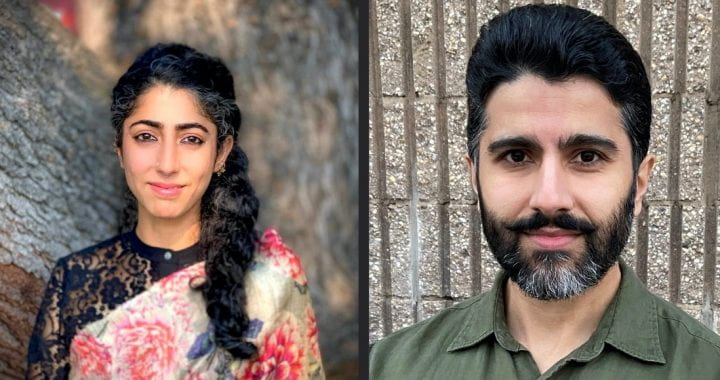
May 19, 2021 — Aarti Sethi & Navyug Gill — Dissent: Farmers, Protests, India

The farmers protests in India have ignited a widespread resistance movement globally. Focused initially on repressive farm laws enacted by the Indian state, the protests have now expanded to include broader environmental, social, and political concerns impacting the livelihood, independence, and sustenance of working people. What was first seen as an agrarian protest movement has become a rallying call for much-needed debates on dissent, casteism, gender, and economic justice.  

Aarthi Sethi is Assistant Professor of Anthropology at UC Berkeley. Her primary research interests are in agrarian anthropology, political-economy, and the study of South Asia. She holds degrees in political science, and cinema and cultural studies, from Delhi University and Jawaharlal Nehru University, New Delhi. She received her Ph.D. in anthropology from Columbia University in 2017, and before joining Berkeley, she had postdoctoral fellowships at Harvard and Brown. She has previously published on, and has ongoing research and teaching interests in, urban ethnography and cinematic, media and visual cultures.

Navyug Gill is a scholar of modern South Asia and global history. He is Assistant Professor in the Department of History at William Paterson University. His research explores questions of agrarian change, labor history, caste politics, postcolonial critique, and global capitalism. His academic and popular writings have appeared in venues such as the Journal of Asian Studies, Economic and Political Weekly, Outlook, Al Jazeera, Law and Political Economy Project, Borderlines, and Trolley Times.

Date | Time
May 19, 2021 | 12:15 – 1:30 PM [PST]
This colloquium is a joint event with the Center for South Asian Studies (CSAS). 

RSVP by 11 AM on Wednesday, May 19th; you will receive the Zoom link and password at 11:30 AM the day of the colloquium.

To RSVP for the entire Spring 2021 series, please fill out this form.
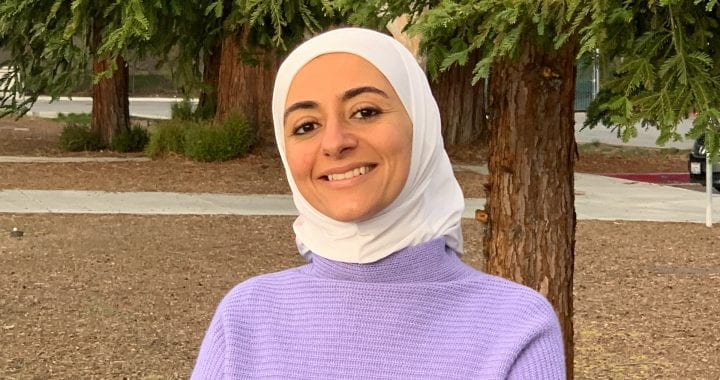
May 26, 2021 — Yasmeen Daifallah — Theorize and Decolonize: Critiques of the Colonized Subject in Contemporary Arab Thought

What does it take to cultivate decolonized subjects in postcolonial times? When anti-colonial struggles are all said and done, and the dust settles on a profoundly reshaped social, economic, and political landscape in their wake, what kinds of intellectual and political labor are required to undo colonized subjectivities and to gradually and systematically produce decolonized ones in their stead? This talk brings the oeuvres of central contemporary Arab thinkers to bear on these questions and discusses what the current resonances of their thought might be for our times. 

Yasmeen Daifallah is Assistant Professor of Politics at UCSC and has been teaching there since January 2019. She arrived by way of UMass-Amherst, the University of Southern California, and UC Berkeley, where she also earned her PhD in political science. She has research interests in critical and postcolonial theory, comparative political theory, and Arab and Islamic political thought.

Date | Time
May 26, 2021 | 12:15 – 1:30 PM [PST]

RSVP by 11 AM on Wednesday, May 26th; you will receive the Zoom link and password at 11:30 AM the day of the colloquium.

To RSVP for the entire Spring 2021 series, please fill out this form.
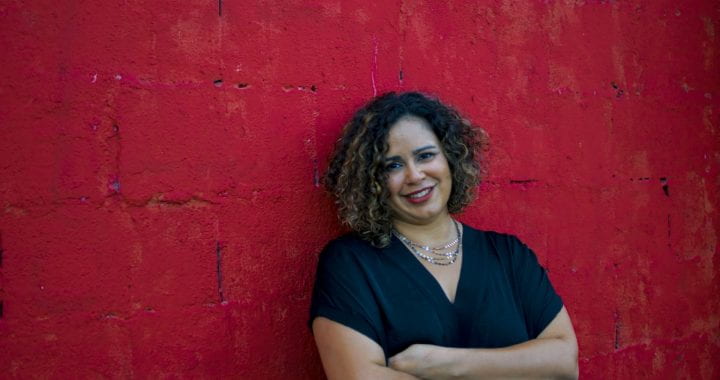
January 13, 2021 — Yarimar Bonilla — An Unthinkable State: Puerto Rico, the United States, and the Aporias of U.S. Empire

In the wake of Hurricane Maria, unprecedented attention turned to the unincorporated territory of Puerto Rico and its enduring colonial relationship with the United States. This presentation will examine the rising popularity and shifting strategies of the Puerto Rican statehood movement, which has grown even as the Puerto Rican territory has experienced an unprecedented economic crisis, with failing infrastructure, a seemingly unpayable public debt, and historic levels of out-migration. Within this context many residents envision annexation as the only way of safeguarding a precarious and unguaranteed place within the nation. Bonilla offers an ethnographic analysis of how statehood is imagined and defended by its supporters and shows how this movement uniquely articulates the very contradictions and power asymmetries that structure Puerto Rico’s relationship to the US.

Yarimar Bonilla is a Professor in the Department of Africana, Puerto Rican and Latino Studies at Hunter College and the Ph.D. Program in Anthropology at the Graduate Center of the City University of New York. She is the author of Non-Sovereign Futures: French Caribbean Politics in the Wake of Disenchantment (2015); co-editor of Aftershocks of Disaster: Puerto Rico Before and After the Storm (2019); and a founder of the Puerto Rico Syllabus Project. Bonilla also writes a monthly column in the Puerto Rican newspaper El Nuevo Día and is a regular contributor to The Washington Post, The Nation, Jacobin, and The New Yorker, and a frequent guest on National Public Radio’s Democracy Now! Her current research—for which she was named a 2018-2020 Carnegie Fellow —examines the politics of recovery in Puerto Rico after Hurricane Maria and the forms of political and social trauma that the storm revealed.

Date | Time
Jan 13, 2021 | 12:15 – 1:30 PM [PST]
This colloquium is co-sponsored by Critical Race and Ethnic Studies (CRES), the Research Center for the Americas (RCA), and the Anthropology Department.

RSVP by 11 AM on Wednesday, January 13th; you will receive the Zoom link and password at 11:30 AM the day of the colloquium.

To RSVP for the entire Winter 2021 series, please fill out this form.
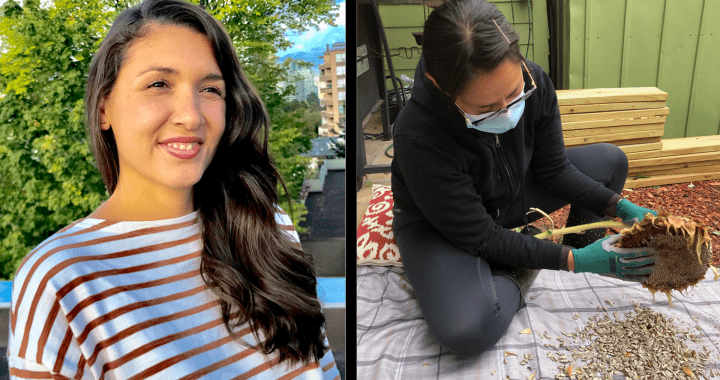
January 20, 2021 — Inaugurating Alternative Futures: A Conversation with Melanie Yazzie and Michelle Daigle

The U.S. President’s Inauguration is on January 20th. We use that date as an occasion to think about alternative futures and political possibilities not beholden to colonial and capitalist dispossession, U.S. sovereignty, and the nation-state form, focusing in particular on Indigenous pathways to alternative political-ethical futures. Melanie Yazzie (University of New Mexico) and Michelle Daigle (University of Toronto) will be in conversation with Gina Dent (UCSC) and Caitlin Keliiaa (UCSC) to discuss methods of resurgence and freedom premised on abolitionist, decolonial, and feminist praxis.

Melanie K. Yazzie (Diné) is an Assistant Professor of Native American studies and American studies at the University of New Mexico. She is also the national chair of the Red Nation, a grassroots organization committed to the liberation of Indigenous people from colonialism and capitalism. She does historical research at the intersections of Indigenous studies, feminist and queer studies, carceral studies, Diné (Navajo) studies, and environmental studies. She also does public intellectual and activist work on Native women’s rights, LGBTQ2 rights, environmental justice, policing and incarceration, Indigenous housing justice, urban Indigenous issues, and international solidarity.

Michelle Daigle is Mushkegowuk (Cree), a member of Constance Lake First Nation in Treaty 9, and of French ancestry. She is an Assistant Professor in the Centre for Indigenous Studies and the Department of Geography & Planning at the University of Toronto. Her research examines colonial capitalist dispossession and violence on Indigenous lands and bodies, as well as Indigenous practices of resurgence and freedom. Her current research project is on extractive geographies in Mushkegowuk territory. Her writing has been published in Antipode, Environment & Planning D, and Political Geography.

Date | Time
Jan 20, 2021 | 12:15 – 1:30 PM [PST]

RSVP by 11 AM on Wednesday, January 20th; you will receive the Zoom link and password at 11:30 AM the day of the colloquium.

To RSVP for the entire Winter 2021 series, please fill out this form.