Headshot of Dr. Katharyne Mitchell

November 6, 2019 — Katharyne Mitchell, “Church Sanctuary and the Spatial Politics of the Sacred”

Church sanctuary is not legal in any state in Europe, but the cultural and religious sense of church space as sacred, and the collective memory of this practice as an alternative form of justice, still has a powerful legacy. In citing past sanctuary ideals and practices, from medieval asylum law to recent sanctuary movements on behalf of refugees, faith-based actors draw on these memories to reactivate older traditions of insurgent citizenship. In this talk, Mitchell explores the critical role of space, collective memory and non-secular webs of belief in these current challenges to orthodox assumptions of state sovereignty.

Katharyne Mitchell is Dean of the Social Sciences and Professor of Sociology at the University of California, Santa Cruz. Current research explores various aspects of migration and religion. Recent books include Making Workers: Radical Geographies of Education (Pluto Press, 2018), and the co-edited Handbook on Critical Geographies of Migration (Edward Elgar, 2019). Mitchell is the author of over 100 articles and book chapters and the recipient of grants from the MacArthur Foundation, Spencer Foundation, and National Science Foundation. The research for this talk was made possible by a Guggenheim Fellowship.

Date/Time
November 6, 2019 | 12:00 PM
Free and open to the public

Venue/Location
Humanities Building 1, Room 210
University of California, Santa Cruz
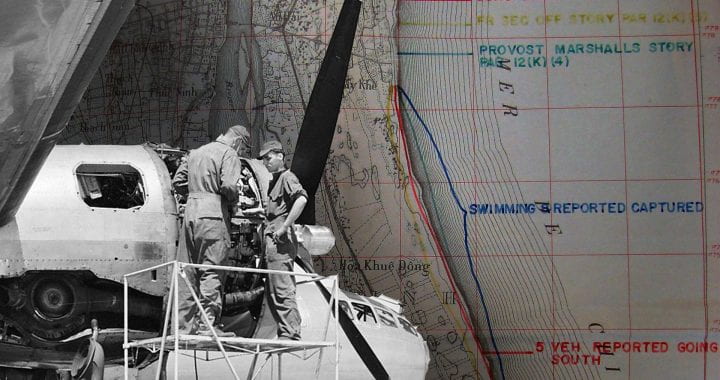
A collage--the foreground is a picture of two men working on an airplane engine, and the background is a a map of Southeast Asia

November 13, 2019 — David Biggs, “Archipelagic Vietnam: Rethinking Nationalism From the Shoreline”

Until recent conflicts over islands in the South China Sea, Vietnam’s history was described in terrestrial terms. Vietnam’s nationalist struggles, we were told, involved epic battles with American and other troops in highland jungles and city streets; and the nation’s territorial expansion from Hanoi happened in two directions: southward and uphill. The sea, as so many history books taught, was a nothing space where foreign invasions began. Vietnam’s geo-body was tied to a Westphalian notion of sovereignty reified in so many books and maps. Real sovereignty in Vietnam, however, was and still is relational. Topologies of trade, commerce, migration and communication have for centuries defined where “Vietnam” begins and so many other cultures and ecologies taper off. Rather than assume a closed model, this talk reimagines Vietnam as an archipelago, a more permeable nation-system of nodes linked by flows of energy, food, people and technology moving from the sea to the mountains and spaces beyond. Drawing from his recently published book, Footprints of War: Militarized Landscapes in Vietnam (Washington, 2018), environmental historian David Biggs conducts an archipelagic history tour along Vietnam’s central coast with stops in the ancient, early modern, colonial and post-colonial past.

David Biggs is a Professor of History at the University of California, Riverside, specializing in twentieth century environmental history with an area focus on Vietnam and Southeast Asia. His first book, Quagmire: Nation-Building and Nature, won the 2011 George Perkins Marsh Prize in Environmental History; and his essays have appeared in such venues as the Journal of Asian Studies, Technology and Culture and the New York Times. He is currently working on a trans-Pacific history of the mid-twentieth century.

Date/Time
November 13, 2019 | 12:00 PM
Free and open to the public

Venue/Location
In solidarity with the UC-wide AFSCME strike November 13, David Biggs’ colloquium talk will be held off campus. Please R.S.V.P. by noon on Tuesday, November 12 to receive the address.

Co-sponsored by the Center for Southeast Asian Coastal Interactions

Black and white photo from theGomantak Maratha Samaj Archives, Mumbai of a seated person wearing Indian clothing

November 20, 2019 — Anjali Arondekar, “What More Remains: Sexuality, Slavery, Historiography”

This talk engages a ‘small’ history of sexuality and slavery in Portuguese India. At stake are three questions: How do we call attention to the displacement of slave pasts within histories of sexuality that are themselves routinely displaced?  How do we locate those displacements in itinerant archives of profit and pleasure, than in archives of loss and trauma? How do we open a dialogue between the interdisciplinary fields of area studies and sexuality studies with an eye to understanding how histories of slavery can reshape, even devastate, these very field-formations? 

Anjali Arondekar is Associate Professor of Feminist Studies, UCSC. Her research engages the poetics and politics of sexuality, colonialism and historiography, with a focus on South Asia. She is the author of For the Record: On Sexuality and the Colonial Archive in India (Duke University Press, 2009, Orient Blackswan, India, 2010), winner of the Alan Bray Memorial Book Award for best book in lesbian, gay, or queer studies in literature and cultural studies, Modern Language Association (MLA), 2010. She is co-editor (with Geeta Patel) of “Area Impossible: The Geopolitics of Queer Studies,” GLQ: A Journal of Lesbian and Gay Studies (2016). Her talk is an excerpt from her forthcoming book, Abundance: On Sexuality and Historiography.

Date/Time
November 20, 2019 | 12:00 PM
Free and open to the public

Venue/Location
Humanities Building 1, Room 210
University of California, Santa Cruz
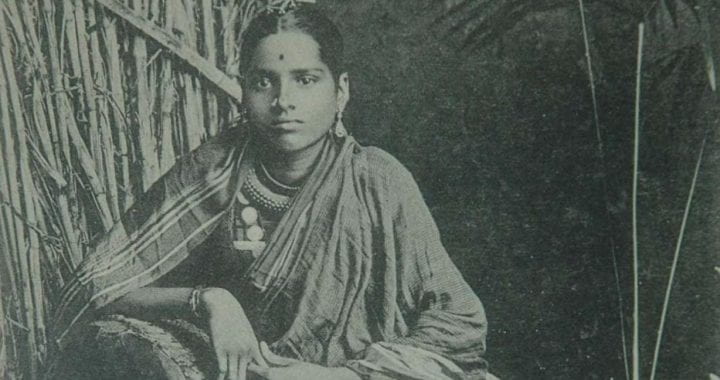
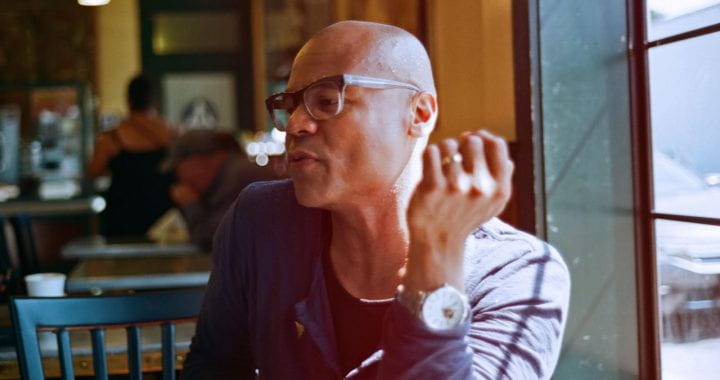
Photo of Ronaldo Wilson seated at a table. He is looking away from the camera, and his elbow is resting on the table.

December 4, 2019 — Ronaldo Wilson, “The Quotidian Lucy and Other Constructions”

“The Quotidian Lucy and Other Constructions” explores some recent site-specific and studio performances (written/visual/sonic) that serve as interventions between theory and practice.  Discussing new works on paper, video, and in performance, Wilson seeks to inhabit and engage with questions of memory, genre, form, and discipline as strategies through which to examine race, sex, and desire in concert with what vocabularies emerge and accrete in rendering multiple drafts of the self through poetic persona, character, and movement. 

Ronaldo V. Wilson, PhD is the author of four collections: Narrative of the Life of the Brown Boy and the White Man, Poems of the Black Object, Farther Traveler: Poetry, Prose, Other, and Lucy 72. The recipient of fellowships from Cave Canem, the Djerassi Resident Artists Program, the Ford Foundation, Kundiman, MacDowell, the National Research Council, the Provincetown Fine Arts Work Center, the Center for Art and Thought, and Yaddo, Wilson is an interdisciplinary artist, who has performed in multiple venues, including the Pulitzer Arts Foundation, UC Riverside’s Artsblock, Louisiana State University’s Digital Media Center Theater, Georgetown’s Lannan Center, Southern Exposure Gallery, and Casa Victoria Ocampo in Buenos Aires. He is Professor of Creative Writing and Literature at U.C. Santa Cruz.

Date/Time
December 4, 2019 | 12:00 PM
Free and open to the public

Venue/Location
Humanities Building 1, Room 210
University of California, Santa Cruz