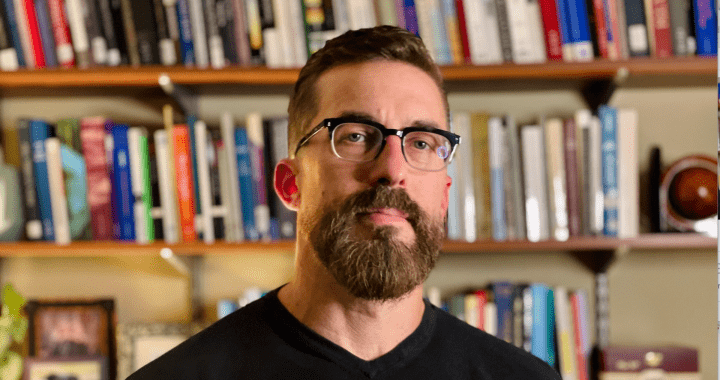
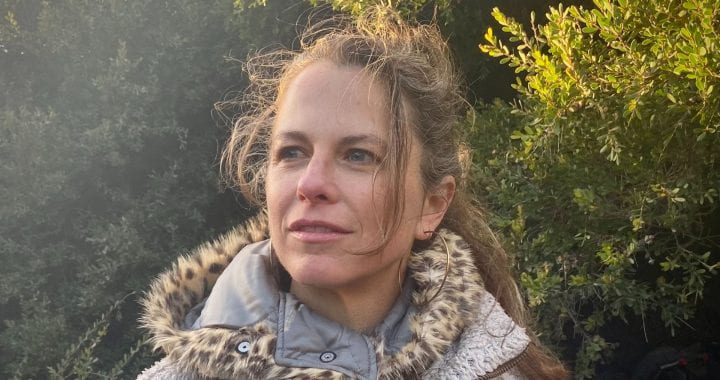
Photo of speaker Professor Seremetakis

April 5 – C. Nadia Seremetakis – A Journey through Border Spaces of the Everyday – zoom

This talk is co-sponsored by the Department of Anthropology 

The border is the shared topos of the anthropologist, the historian, the archaeologist, the artist, the musician and the poet, as they all bring into dialogue the past and future with the present, the inside with the outside, the particular with the general, ideas with the senses. This lecture explores border and trauma spaces through a journey of antiphonic witnessing and memory as a way of (re)establishing a self-reflexive relationship with the past that changes the positioning of the present. Drawing on 30 years of conscious and unconscious fieldwork, writing, teaching and practicing multimedia public anthropology, I reflect on my own antinomic subject position in my discipline as a so called “native,” or “indigenous” ethnographer and also as a diasporic, American-trained, post-Boasian anthropologist.

C. Nadia Seremetakis is Professor of cultural anthropology and the author of seven books including poetry. She is best known for her ethnographies The Senses Still, The Last Word: Women Death Divination, and Sensing the Everyday, written in two languages. Born and raised in Greece, she studied and taught in New York where she lived for more than two decades and later joined the University of the Peloponnese.  She has conducted fieldwork in various parts of the world and to this day  she divides her life between USA and Europe.  

Date | Time
April 5, 2023 | 12:15 – 1:30 PM [PST]
Free and open to the public

Venue | Location 
Online only event

RSVP by 11 AM on the day of the colloquium, and you will receive the Zoom link and password at 11:30 AM.
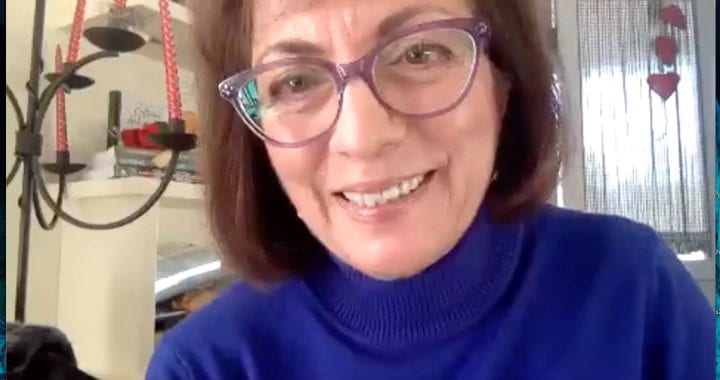
 

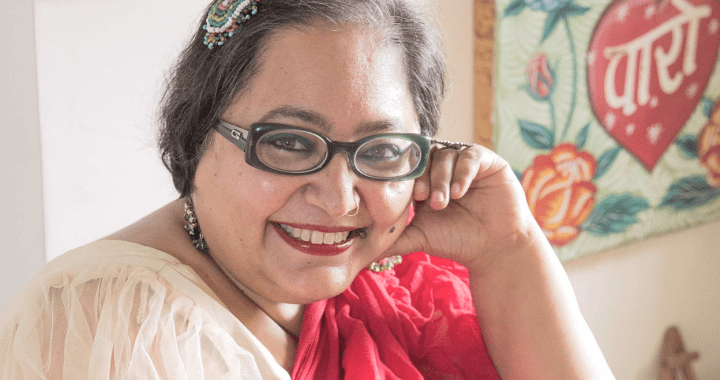
Paromita smiling

April 12 – Paromita Vohra – The Lovers’ Argument: What Bollywood Songs Taught Me About Making Documentaries

This talk is sponsored by the Center for South Asian Studies (CSAS)

As a documentary filmmaker, working in India, and especially as one interested in political conversation and social change, you inherit a form. The documentary form ostensibly exists outside commercial mainstream Indian cinema, privileges realism, and is marked by ethical nobility and commitment, and a willingness to be a little bit bored for a political cause. Shorn of frivolity, of excess, of emotional unpredictability and most importantly of pleasure, such settled pieties of the documentary form are difficult to accept. Instead, I offer, a kind of Hindi film duet, as the basis for thinking about documentary form: the lover’s argument which invokes shared experience, seduction, dangerous knowledge, revelation and pleasure. What kind of politics might this aesthetic suggest, when the argument is made in the service of connection, not conquest?

Paromita Vohra is a filmmaker and writer who works with a range of forms, including film, comics, digital media, installation art and writing to explore themes of feminism, desire, urban life and popular culture. Her work has been exhibited at the Tate Modern, the Wellcome Gallery and the National Gallery of Modern Art, and screened around the world. Her films as director include the documentaries Unlimited Girls, Q2P, Where’s Sandra? and Morality TV and the Loving Jehad: Ek Manohar Kahanai, among others and a series of short musical films including The Amourous Adventures of Megha and Shakku in the Valley of Consent. She has written the fiction feature Khamosh Pani, the documentaries Skin Deep, Stuntmen of Bollywood, and If You Pause, the play Ishquiya:Dharavi Ishtyle and the comic Priya’s Mirror. She has published several essays on film, popular culture, love and desire as well as short stories and writes a weekly newspaper column, Paro-normal Activity in Sunday Mid-day. In 2015 she founded the Agents of Ishq, an award-winning digital platform for conversations on sex, love and desire in India and is currently its Creative Director.

Date | Time
April 12, 2023 | 12:15 – 1:30 PM [PST]
Free and open to the public

Venue | Location 
Humanities Building 1, Room 210
University of California, Santa Cruz

Please note: this is a hybrid event. To receive a link, RSVP by 11 AM on the day of the colloquium, and you will receive the Zoom link and password at 11:30 AM.
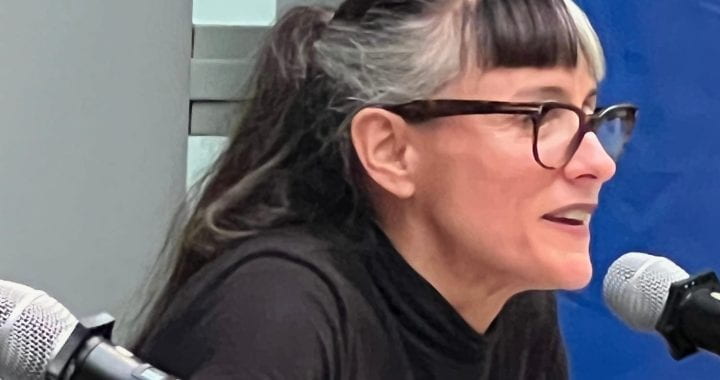
prof. lawler

April 19 – Kristin Lawler – Surfing, Capitalism, and the Refusal of Work

In this talk, I will examine surfing as a countercultural practice and will consider the ways in which it constitutes a lived refusal of the logic of capital. I will look at several contemporary and historical iterations of the surf image in popular culture to think through its political significance, and will survey the state of the new field of “surf studies.”

Kristin Lawler is Professor of Sociology at the College of Mount Saint Vincent in New York City. She is author of The American Surfer, published in 2011, and co-editor of the forthcoming volume Roll and Flow: the Political Ontology of Surf and Skate. Her work appears in numerous edited collections, including Feminism and the Early Frankfurt School (forthcoming); Class: the Anthology; Nietzsche and Critical Social Theory; Bohemias in Southern California; and The Critical Surf Studies Reader. She is a contributing member of the editorial board of the journal Situations: Project of the Radical Imagination and a member of the board of directors of the Institute for the Radical Imagination.

Date | Time
April 19, 2023 | 12:15 – 1:30 PM [PST]
Free and open to the public

Venue | Location 
Humanities Building 1, Room 210
University of California, Santa Cruz

Please note: this is a hybrid event. To receive a link, RSVP by 11 AM on the day of the colloquium, and you will receive the Zoom link and password at 11:30 AM.
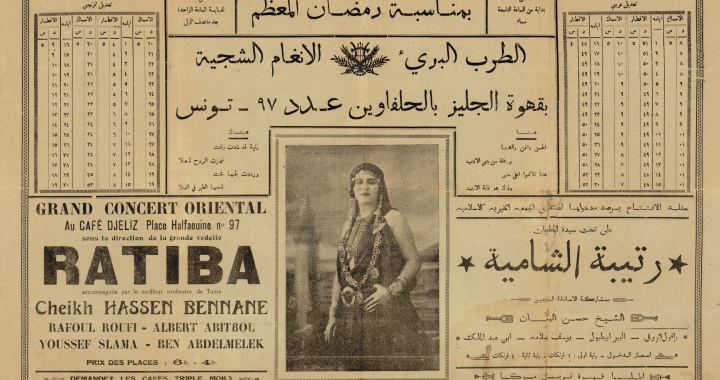
Numerisation

April 26 – Christopher Silver – Recording History: Jews, Muslims, and Music across Twentieth-Century North Africa

This event is co-sponsored by Jewish Studies 

In Recording History, Christopher Silver provides the first history of the music scene and recording industry across twentieth century Morocco, Algeria, and Tunisia. In doing so, he offers striking insights into Jewish-Muslim relations through the rhythms that animated them. For more than six decades, thousands of phonograph records flowed across North African borders. The sounds embedded in their grooves were shaped in large part by Jewish musicians, who gave voice to a changing world around them. Their popular songs broadcast on radio, performed in concert, and circulated on disc carried with them the power to delight audiences, stir national sentiments, and frustrate French colonial authorities. In asking what North Africa once sounded like, Silver will introduce the UCSC community to a world of many voices, whose music defined their era and still resonates into our present.

Christopher Silver is the Segal Family Assistant Professor in Jewish History and Culture in the Department of Jewish Studies at McGill University. He earned his PhD in History from UCLA. Recipient of grants from the Posen Foundation, the American Academy of Jewish Research, the American Institute for Maghrib Studies, and the Association for Recorded Sound Collections, Silver is the author of numerous articles on North African history and music, including in the International Journal of Middle East Studies, Jewish Social Studies, and Hespéris-Tamuda. He is also the founder and curator of the website Gharamophone.com, a digital archive of North African records from the first half of the twentieth century. His first book Recording History: Jews, Muslims, and Music Across Twentieth Century North Africa was published in June 2022 with Stanford University Press.

Date | Time
April 26, 2023 | 12:15 – 1:30 PM [PST]
Free and open to the public

Venue | Location 
Humanities Building 1, Room 210
University of California, Santa Cruz

Please note: this is a hybrid event. To receive a link, RSVP by 11 AM on the day of the colloquium, and you will receive the Zoom link and password at 11:30 AM.
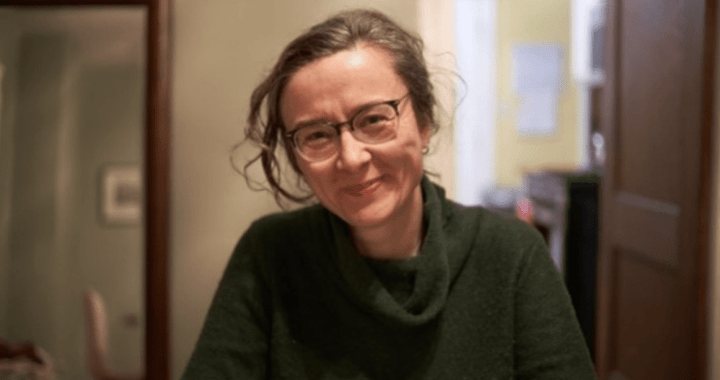
Prof Musiol in a room

May 3 – Hanna Musiol – Wounded Landscapes and Maps of Hurt: Breaths, Scars, and Tender Story-Sharing  

This event is co-sponsored by Film and Digital Media

Maps always sense and often cut. Much has been written about their violence, as an overture for the genocidal touch, as a prospecting tool priming landscapes for material and narrative extraction, or as an instrument of attritional social neglect (Lo Presti). Hegemonic cartographies live off of elisions of “disposable bodies” and on demarcation lines which construct architectures of harm (Lambert). This talk focuses instead on scars, gasps of pain, cartographic story-sharing, and maps of hurt. It is thus an homage to marginalized but not marginal bodies, stories and breaths, all demanding oxygen, care, delight, and a “right to co-existence” (Holmes). Drawing on the work of feminist, diasporic, and critical race thinkers, architects, poets, human geographers, and Indigenous Arctic mixmedia practitioners—Katherine McKittrick, Olga Lehmann, Pia Arke, Afaa Weaver, Laura Lo Presti, Johnny Pitts, Eliane Brum, Viktorija Bogdanova, among many others—Musiol will center on site-specific cartographic acts of “tender narration” involving artivists, architects, mappers, students, and literary scholars working together in art galleries, on the page, in our classrooms, and in the streets (Tokarczuk). Specifically, she will meander across several sites and rehearsals of remapping: Afaa Weavers’s and Viktorija Bogdanova’s poetic maps of spaces that “hurt us” and Sissel Bergh’s textual cartographies of South Sámi coast; monumental, yet ephemeral urban-scale poetic storytelling actions taking over the streets, pages, bodies, and facades in Trondheim and Hiedanranta; and, finally, site-specific pedagogies of cartographic story-sharing, which draw on the ambulatory, resuscitative, biosocial oxygen-delivery affordances of poetry (in polylingual urban poetic ensembles and Søstrene Suse’s Radiokino listening seances). The talk will conclude with reflection about the cartographic acts of “repair,” tenderness, and “unlearning” (Azoulay), asking, after Josie Billington and Pia Arke, how we, literary and cultural scholars and students, can attend to the wounded bodies and landscapes “personally,” using our meager disciplinary tools and “enfleshed” cartographies of hurt (Sharpe). 

Hanna Musiol (PhD, Northeastern University) is Professor of Modern/Contemporary Literature at NTNU (Norway) and a 2022–2023 Human Rights Fellow at SUNY Binghamton (US). Her research interests include transnational literary studies, site-specific transmedia storytelling and reparative reading practices, and critical theory, with emphasis on migration, environmental humanities / political ecology, and environmental and human rights. She publishes frequently on aesthetics and justice, and her work has appeared in DHQ, ASAP/J, Environment, Space, and Place, Technology of Human Rights Representation, Journal of American Studies, and Writing Beyond the State. Musiol regularly co-organizes city-scale curatorial, public humanities, and civic-engagement initiatives and exhibitions, such as Narrating the City, Of Borders and Travelers, Spectral Landscapes, and Resist as Forest. She is based in Trondheim, where she frequently collaborates with grassroots urban storytelling initiatives such as Literature for Inclusion & Poetry without Borders. She is currently involved in several transborder research projects devoted to spatial storytelling: Narrating Sustainability, One by Walking, Environmental Storytelling, and Environmental Practices Across Borders

Date | Time
May 3, 2023 | 12:15 – 1:30 PM [PST]
Free and open to the public

Venue | Location 
Humanities Building 1, Room 210
University of California, Santa Cruz

Please note: this is a hybrid event. To receive a link, RSVP by 11 AM on the day of the colloquium, and you will receive the Zoom link and password at 11:30 AM.
Abaca fabric detail

May 10 – Kathleen Cruz Gutierrez – Vernaculars of Plant Knowing: Woven Transformations in the Early 20th-Century Davao Gulf

In this talk, Gutierrez will share from her first book project on the history of colonial botany in the Philippines. The book argues that vernaculars of plant knowing made and unmade botany at the turn of the nineteenth and twentieth centuries, when imperial Anglo-European botanists banded together to steady the philosophical and practical tenets of the science under an internationalist banner. Taking as her case study the contrapuntal story of Bagobo weavers and the acceleration of abacá plantations in the Philippines, Gutierrez demonstrates the disciplinary makings of the science that enabled transformative settler-colonial currents in the Pacific colony’s southern gulf.

Kathleen “Kat” Cruz Gutierrez is Assistant professor of History at the University of California, Santa Cruz. In 2021 and 2022, she completed Mellon-funded postdoctoral and interdisciplinary residencies at the Humanities Institute of the New York Botanical Garden and the Oak Spring Garden Foundation. A specialist of the history of science and the plant humanities, she is the co-editor of the forthcoming special issue “Science and Technology Studies in the Philippines” in Philippine Studies. Since joining UCSC, she has also served as co-PI on the interdivisional campus-community research initiative, Watsonville is in the Heart

Date | Time
May 10, 2023 | 12:15 – 1:30 PM [PST]
Free and open to the public

Venue | Location 
Humanities Building 1, Room 210
University of California, Santa Cruz

Please note: this is a hybrid event. To receive a link, RSVP by 11 AM on the day of the colloquium, and you will receive the Zoom link and password at 11:30 AM.
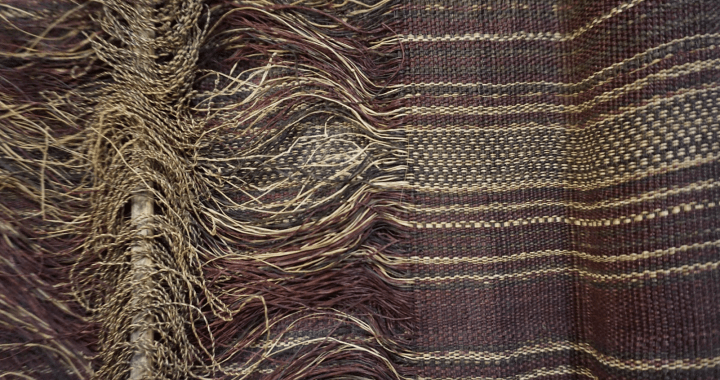
photo of hannah zeavin

May 24 – Hannah Zeavin – Hot and Cool Mothers

This event is co-sponsored by The Center for World History

From the mid-1940s until the 1960s and beyond, class, race, and maternal function were linked in metaphors of temperature in pediatric psychological studies of Bad Mothers. Newly codified diagnoses of aloof “refrigerator mothers” and overstimulating “hot mothers” were inseparable from midcentury conceptions of stimulation, mediation, domesticity, and race, including Marshall McLuhan’s theory of hot and cool media, as well as maternal absence and (over)presence, echoes of which continue in the present in terms like “helicopter parent.” Whereas autism and autistic states have been extensively elaborated in their relationship to digital media, this talk attends to attributed maternal causes of “emotionally disturbed,” queer, and neurodivergent children. The talk thus elaborates a media theory of mothering and parental “fitness.” 

Hannah Zeavin is a scholar, writer, and editor, and works as an Assistant Professor at Indiana University and a Visiting Fellow at the Columbia University Center for The Study of Social Difference. Zeavin is the author of The Distance Cure: A History of Teletherapy (MIT Press, 2021) and at work on her second book, Mother’s Little Helpers: Technology in the American Family (MIT Press, 2024). Articles have appeared in American Imago, differences: A Journal of Feminist Cultural Studies, Technology and Culture, Media, Culture, and Society, and elsewhere. Essays and criticism have appeared or are forthcoming from Dissent, The Guardian, Harper’s Magazine, n+1, The New York Review of Books, The New Yorker, and elsewhere. In 2021, Zeavin co-founded The Psychosocial Foundation and is the Founding Editor of Parapraxis, a new popular magazine for psychoanalysis on the left, which will be releasing its first issue in Fall 2022.

Date | Time
May 24, 2023 | 12:15 – 1:30 PM [PST]
Free and open to the public

Venue | Location
Humanities Building 1, Room 210
University of California, Santa Cruz

Please note: this is a hybrid event. To receive a link, RSVP by 11 AM on the day of the colloquium, and you will receive the Zoom link and password at 11:30 AM.

Prof. R by brick wall

May 31 – Sebastián Gil-Riaño – Stolen Evidence: Indigenous Children and Bio-historical Narratives of the Western Hemisphere during the Cold War

The talk is sponsored by the Mellon Sawyer Seminar on Race, Empire, and the Environments of Biomedicine

This talk examines how anthropologists and human biologists used abducted Indigenous children in South America as sources of evidence for a variety of bio-historical research projects during the Cold War. From 1930 to 1970, human scientists studying the Aché — a traditionally nomadic hunter-gatherer group in Paraguay — used evidence derived from measuring, bleeding, and observing children in the service of research projects concerned with reconstructing global human migrations in the Western hemisphere. Through studies of Aché children and families, scientists like the French naturalist Jehan Albert Vellard, the U.S. human geneticist Carleton Gajdusek, and the French structural anthropologists Pierre and Helen Clastres discerned ancient patterns of migration by considering the diffusion of cultural and linguistic traits, the process of genetic drift in populations, and the immunological effects of European conquest. Yet many of the Aché children used in these studies had been abducted and sold as servants to neighboring ranchers. By highlighting the use of stolen Indigenous children as research objects in Cold War human diversity research, my talk uncovers the enduring and violent colonial structures that made this knowledge possible as well as the ethical and legal protocols and forms of Indigenous resistance that emerged in response.

Sebastián Gil-Riaño is an Assistant Professor of History and Sociology of Science at the University of Pennyslvania. Born in Colombia and raised in Canada, he is a historian of science who studies transnational scientific conceptions of race, culture, and indigeneity in the twentieth century. His first book, The Remnants of Race Science: UNESCO and Economic Development in the Global South will be published by Columbia University Press on August 31st, 2023.

Date | Time
May 31, 2023 | 12:15 – 1:30 PM [PST]
Free and open to the public

Venue | Location 
Humanities Building 1, Room 210
University of California, Santa Cruz

Please note: this is a hybrid event. To receive a link, RSVP by 11 AM on the day of the colloquium, and you will receive the Zoom link and password at 11:30 AM.
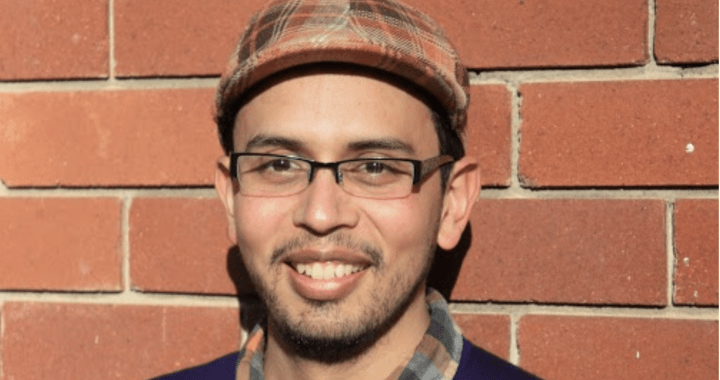
image of Dean Mathiowetz and books

January 18 – Dean Mathiowetz – Luxuriating as a Political Structure of Feeling

According to premodern elites, the luxurious appetites of the poor were not only feminine and exotic but also the greatest threat to social order. Popular demands for better wages, sustenance, more festival days, or any improvement in the conditions of ordinary folk were denounced as “luxury.” But scholarship about this discourse has been misdirected by premodern sumptuary laws, focusing on luxury as a class of things. I focus on the act of luxuriating instead, drawing out its embodied, affective, and tactical dimensions as a “structure of feeling.” I argue that a focus on luxuriating opens our thought to the political potential in the physical, sensory, and lived experience of the poor as they lay claim to enjoyment and abundance.

Dean Mathiowetz is Associate Professor of Politics, currently working on a book manuscript Luxuriating in Democracy, Abundance, and the Enjoyment of Bodies Politic. He is the author of Appeals to Interest: Language and the Shaping of Political Agency and the editor of and contributor to Hanna Fenichel Pitkin: Politics, Justice, and Action. His other writings have appeared in journals including Political Theory, Theory and Event, Political Research Quarterly, The New Political Science, and The Arrow.

Date | Time
January 18, 2023 | 12:15 – 1:30 PM [PST]
Free and open to the public

Venue | Location 
Humanities Building 1, Room 210
University of California, Santa Cruz

Photo of Prof. Allewaert in front of tree

January 25 – Monique Allewaert – Ground Has Eye: Anansi and Animist Multinaturalism

Drawing on an archive of nearly three hundred Anansi tales collected between 1814 and 1935, this talk documents the animist multinaturalism at stake in Jamaican Anansi tales. This form of multinaturalism contests colonial conceptions of nature as well as the ideas about language that follow on colonial nature. Using the power of puns, metaphors, rhyme, and performance, Anansi and other insect avatars convert colonial nature into abolition ecologies. More broadly, the constellation of problems and powers associated with West Indian bugs (imperceptibility, smallness, shapeshifting, co-metabolism, environmental change), informs a situated decolonial knowledge inspired by insects’ navigation of their environments.

Monique Allewaert is Associate Professor of English at the University of Wisconsin-Madison. She works at the intersections of eighteenth and nineteenth-century hemispheric American colonialisms, the environmental humanities, literary and cultural studies, and science studies. She is the author of Ariel’s Ecology: Plantations, Personhood, and Colonialism in the American Tropics (2013). Her current book project Luminescence follows insect avatars through eighteenth-century Caribbean natural history, story, riddles, song, and poetry to elaborate counter-plantation knowledges and aesthetics.

Date | Time
January 25, 2023 | 12:15 – 1:30 PM [PST]
Free and open to the public

Venue | Location
Humanities Building 1, Room 210
University of California, Santa Cruz

Remote Option

RSVP by 11 AM on Wednesday, January 25, you will receive the Zoom link and password at 11:30 AM the day of the colloquium.