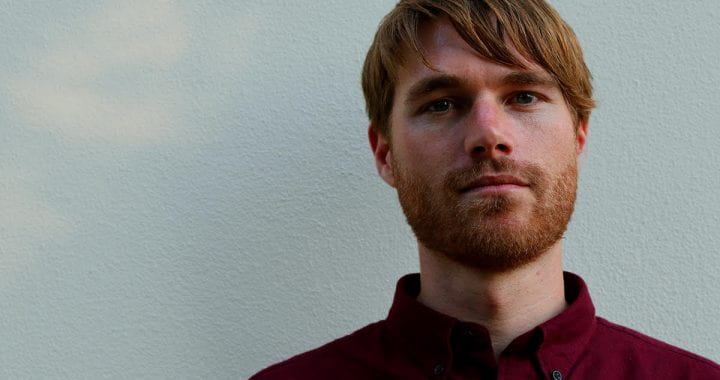
May 11 – Kyle Parry – Generativity Across Scales

Toni Morrison said a book is not “This is what I believe,” because that would be “just a tract.” Rather, a book is “I don’t know what it is, but I am interested in finding out what it might mean to me, as well as to other people.” This talk’s “I don’t know” is a concept that has been used to describe everything from language to a life stage to the creative power of the internet: generativity. Arguing against uncritical visions of generative AI, I frame generativity as a fact and a force at work across multiple scales of networked life. It is something people do together, and that might yet be done differently.

Kyle Parry is Assistant Professor of History of Art and Visual Culture at UC Santa Cruz. His research focuses on how people use and understand digital media. His forthcoming book, _A Theory of Assembly: From Museums to Memes_, proposes that a cultural form deserving of the name assembly has come to equal narrative and representation in its reach and influence. A second, co-edited book, _Ubiquity: Photography’s Multitudes_, reframes the ubiquity of photography as a political and historical fantasy. He’s working on a new book on generativity.

Date | Time
May 11, 2022 | 12:15 – 1:30 PM [PST]

RSVP by 11 AM on Wednesday, May 11th; you will receive the Zoom link and password at 11:30 AM the day of the colloquium.

To RSVP for the entire Spring 2022 series, please fill out this form.
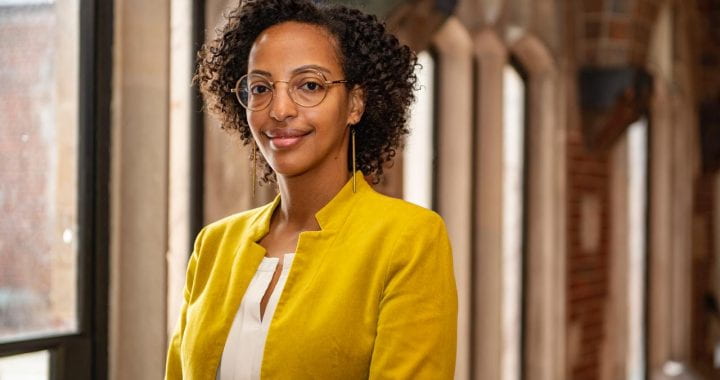
May 18 – Adom Getachew – Africa for the Africans: A History of Self-Determination before Decolonization

From the mid-nineteenth century into the twentieth, Africa for the Africans was the banner under which a range of pan-Africanists imaginaries and political projects were articulated. This lecture charts the transformations of this pan-African motto, examining in particular the shifting conceptions of “Africa” in the first two decades of the twentieth century.

Adom Getachew is Neubauer Family Assistant Professor of Political Science at the University of Chicago. She is a political theorist with research interests in the history of political thought, theories of race and empire, and postcolonial political theory. Her work focuses on the intellectual and political histories of Africa and the Caribbean. She is the author of Worldmaking after Empire: The Rise and Fall of Self-Determination from Princeton University Press (2019) and co-editor, with Jennifer Pitts, of the forthcoming W .E. B. Du Bois’s International Thought. She is currently working on a second book on the intellectual origins and political practices of Garveyism—the black nationalist/pan-African movement, which had its height in the 1920s. Her public writing has appeared in Dissent, Foreign Affairs, the London Review of Books, the Nation, and New York Times.

Date | Time
May 18, 2022 | 12:15 – 1:30 PM [PST]

RSVP by 11 AM on Wednesday, Mya 18th; you will receive the Zoom link and password at 11:30 AM the day of the colloquium.

To RSVP for the entire Spring 2022 series, please fill out this form.
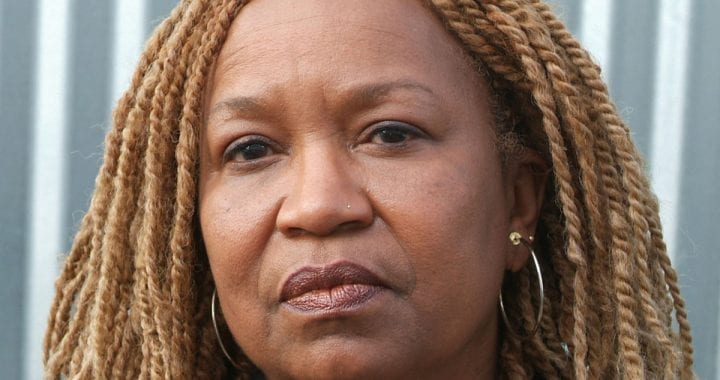
May 25 – Barbara McCullough – In Conversation with Lior Shamriz

A native of New Orleans, Barbara McCullough has spent most of her life in southern California. Her initial interest was in photography but the moving image, immediacy, and possible forum for ideas set her on a path of exploration. McCullough’s work progressed to examining the creative process of artists but always maintaining a fascination with experimental film and video. McCullough sees herself as part of the continuum of African American storytellers whose aim is to preserve knowledge by capturing the essence of her culture — its life, spirit, and magic. She states, “I am dedicated to the preservation of the heritage of the African American artist/cultural worker by documenting her/his achievements for future generations to keep the music and visual poetry alive.” Her work has been shown in galleries, museums, and film festivals nationally and internationally and she is associated with UCLA filmmakers known as the LA Rebellion.

Date | Time
May 25, 2022 | 12:15 – 1:30 PM [PST]

RSVP by 11 AM on Wednesday, May 25th; you will receive the Zoom link and password at 11:30 AM the day of the colloquium.

To RSVP for the entire Spring 2022 series, please fill out this form.
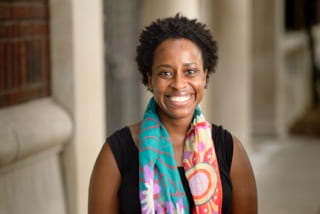
June 1, 2022 – Ronaldo V. Wilson and Gina Athena Ulysse – choose to begin/ from the ground up/ literally:

“choose to begin/ from the ground up, literally:” is a conversation whose title is borrowed from Ulysse’s mixed-media assemblage, “Woodswork/Rasanblaj,” digital photos—tree roots, exposed by sun, open field, capturing frey of feeling, living and striated bark— and poetry, where—“No One Could/Save me but you.” This presentation operates between urgencies, where Ronaldo V. Wilson will reflect on and with Gina Athena Ulysse’s meditations, work that leads and pulls from the earth into what Ulyssee describes as the “ancestral imperative,”—here: material forms, sonic lineages, and images begin.

Gina Athena Ulysse is based in Santa Cruz, California where she is professor of Feminist Studies at UCSC. A photographer, poet, chanteuse, and a cultural anthropologist who is always writing something, she has presented her works in numerous colleges, and universities nationally and internationally. She has also performed in artistic venues including: The Bowery, Brecht Forum, The British Museum, Brooklyn Museum, Court Theatre, Gorki Theatre, House of World Cultures in Berlin, LaMaMa, Lyric Stage Theatre, Marcus Garvey Liberty Hall, MoMA Salon, and the Museum of Contemporary Art in Sydney, Australia among others. In 2020, she was invited to the Biennale of Sydney.

Ronaldo V. Wilson, PhD, is the author of: Narrative of the Life of the Brown Boy and the White Man (University of Pittsburgh Press, 2008), winner of the Cave Canem Prize; Poems of the Black Object (Futurepoem Books, 2009), winner of the Thom Gunn Award for Gay Poetry and the Asian American Literary Award in Poetry; Farther Traveler: Poetry, Prose, Other (Counterpath Press, 2014), finalist for a Thom Gunn Award for Gay Poetry; and Lucy 72 (1913 Press, 2018). His latest books are Carmelina: Figures (Wendy’s Subway, 2021) and Virgil Kills: Stories (Nightboat Books, 2022). Co-founder of the Black Took Collective, Wilson is also an interdisciplinary artist. A recent, MacDowell, and Robert Rauschenberg Foundation Fellow, Wilson is Professor of Creative Writing and Literature at UC Santa Cruz, serving on the core faculty of the Creative Critical PhD Program; principal faculty member of CRES (Critical Race and Ethnic Studies); and affiliate faculty member of DANM (Digital Arts and New Media).

Date | Time
June 1, 2022 | 12:15 – 1:30 PM [PST]

RSVP by 11 AM on Wednesday, June 1st; you will receive the Zoom link and password at 11:30 AM the day of the colloquium.

To RSVP for the entire Spring 2022 series, please fill out this form.
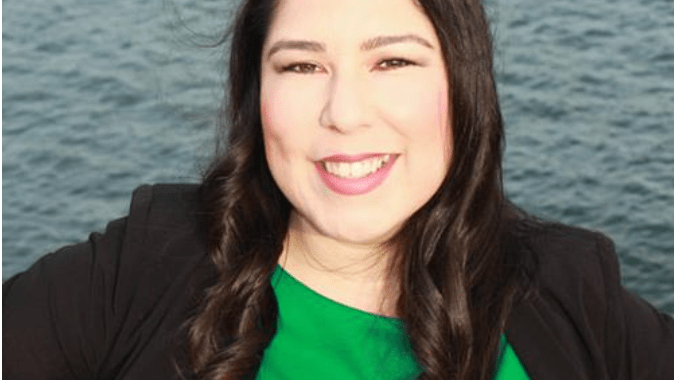
January 12, 2022 — Jean Beaman — Suspect Citizenship

Incidents of state violence and activism against that violence illustrate the continuing significance of race and the persistence of white supremacy in France, the United States, and worldwide. Based on past and current ethnographic research and interviews with ethnic minorities in the Parisian metropolitan region, this talk argues that, despite France’s colorblind and Republican ethos, France’s “visible minorities” function under a “suspect citizenship” in which their full societal belonging is never granted. I focus on the growing problem of state-sponsored violence against ethnic minorities which reveals how France is creating a “bright boundary” (Alba 2005) between whites and non-whites, furthering disparate outcomes based on race and ethnic origin. By considering the multifaceted dimensions of citizenship and belonging in France, I demonstrate the limitations of full societal inclusion for France’s non-white denizens and how French Republicanism continues to mark, rather than erase, racial and ethnic distinctions.

Jean Beaman is Associate Professor of Sociology, with affiliations with Black Studies, Political Science, Feminist Studies, Global Studies, and the Center for Black Studies Research, at the University of California, Santa Barbara. Previously, she was faculty at Purdue University and held visiting fellowships at Duke University and the European University Institute (Florence, Italy). Her research is ethnographic in nature and focuses on race/ethnicity, racism, international migration, and state violence in both France and the United States. She is author of Citizen Outsider: Children of North African Immigrants in France (University of California Press, 2017), as well as numerous articles and book chapters. Her current book project is on suspect citizenship and belonging, anti-racist mobilization, and activism against police violence in France. She received her Ph.D. in Sociology from Northwestern University. She is also an Associate Editor of the journal, Identities: Global Studies in Culture and Power and a Corresponding Editor for the journal Metropolitics/Metropolitiques. She is the Co-PI for the Mellon Foundation Sawyer Seminar grant, “Race, Precarity, and Privilege: Migration in a Global Context” for 2020-2022.

Date | Time
January 12, 2022 | 12:15 – 1:30 PM [PST]

RSVP by 11 AM on Wednesday, January 12th; you will receive the Zoom link and password at 11:30 AM the day of the colloquium.

To RSVP for the entire Winter 2022 series, please fill out this form.
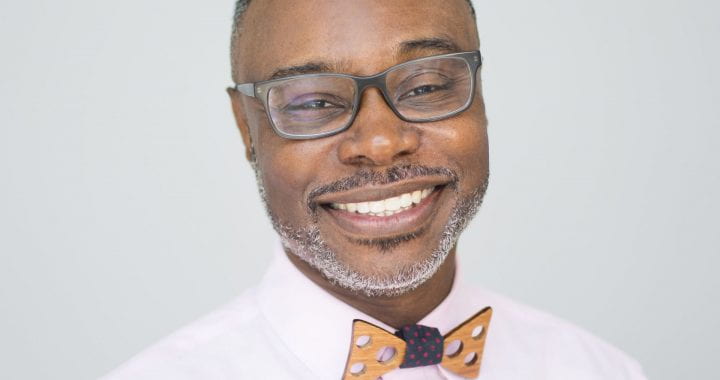
January 19, 2022 — Caitlin Keliiaa — Occupational Risk: Sexual Surveillance and Federal Regulation of Native Women’s Bodies

This talk examines how bodily regulation unfolded on Native women domestic workers in the early 20th-century Bay Area and how sexual surveillance in the Bay Area Outing Program affected Native women. To this end, Keliiaa analyzes cases of sexual surveillance, presumed delinquency, sexually transmitted infections and policing of Native women’s bodies. Through these intimate stories, Keliiaa demonstrates the ways in which the settler state attempted to and at times succeeded in managing and controlling Native women.

Caitlin “Katie” Keliiaa is Assistant Professor of Feminist Studies at UC Santa Cruz. She is an interdisciplinary feminist historian specializing in 20th-century Native experiences in the West. Her scholarship engages Indian labor exploitation, dispossession and surveillance of Native bodies especially in Native Californian contexts. Her book project examines how Native women domestic workers negotiated and challenged an early 20th-century Indian labor program based in the San Francisco Bay Area. In this work, Professor Keliiaa centers Native women’s voices uncovered from federal archives.

Date | Time
January 19, 2022 | 12:15 – 1:30 PM [PST]

RSVP by 11 AM on Wednesday, January 19th; you will receive the Zoom link and password at 11:30 AM the day of the colloquium.

To RSVP for the entire Winter 2022 series, please fill out this form.

January 26, 2022— Xavier Livermon — Safe Houses? Queerness, Performance, and the Land Question in South Africa

During the height of COVID restrictions in 2020, a group of Black queer artists in Cape Town occupied a ritzy home that had been converted into an Air B and B. They intended to overstay their original booking in order to bring attention to the issue of inequitable housing policy in South Africa, and the particular ways that the continuation of apartheid urban planning created disproportionate vulnerabilities for Black queer folk in Cape Town. In this talk, I will consider the political implications of joining queerness with the land question in post-apartheid South Africa through direct political action and performance.

Xavier Livermon is Associate Professor of Critical Race and Ethnic Studies at UCSC.

Date | Time
January 26, 2022 | 12:15 – 1:30 PM [PST]

RSVP by 11 AM on Wednesday, January 26th; you will receive the Zoom link and password at 11:30 AM the day of the colloquium.

To RSVP for the entire Winter 2022 series, please fill out this form.
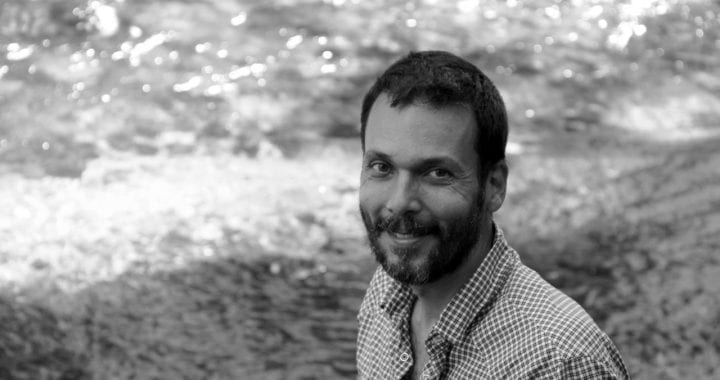
February 2, 2022— Massimiliano Tomba — Revolutions/Restorations

Reading revolutions through the prism of a concept of history that is not teleological or unilinear but is instead structured as a pluriverse of historical temporalities, this talk shows how different temporalities and semantic stratification of revolution are reactivated in historical revolutionary moments. From this perspective, the ancient notions of revolution and restoration are not erased but coexist as temporal stratifications. Tomba’s analysis is articulated through historical cases, from the German peasant war of 1525 to the Water War in Bolivia in 2000.

Massimiliano Tomba is the author of Krise und Kritik bei Bruno Bauer: Kategorien des Politischen im nachhegelschen Denken (2005); La vera politica: Kant e Benjamin: la possibilità della giustizia (2006); Marx’s Temporalities (2013); Attraverso la piccolo porta: Quattro studi su Walter Benjamin (Mimesis, 2017); and Insurgent Universality: An Alternative Legacy of Modernity (2019).

Date | Time
February 2, 2022 | 12:15 – 1:30 PM [PST]

RSVP by 11 AM on Wednesday, February 2nd; you will receive the Zoom link and password at 11:30 AM the day of the colloquium.

To RSVP for the entire Winter 2022 series, please fill out this form.
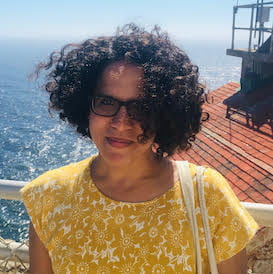
February 9, 2022— Jorgge Menna Barreto — Voicescapes for the Landless

This project expands traditional oral history methodologies by recording the voices of farmers of the Brazilian Landless Workers Movement (MST) embedded in the soundscapes of the food forests they cultivate. The resulting situated multispecies voicescapes will be used in the creation of pedagogical material for students in rural schools and beyond.

Jorgge Menna Barreto, Ph.D. is a Brazilian artist and educator, whose practice and research have been dedicated to site-specific art for over 20 years. In 2014, he worked on a postdoctoral research project at Universidade do Estado de Santa Catarina, Brazil, where he collaborated with a biologist and an agronomist to study relations between site-specific art and agroecology, centring around agroforestry. In 2020 he completed a second postdoctoral research at Liverpool John Moores University, England, which led to the work presented at the Liverpool Biennial in 2021. Menna Barreto approaches site-specificity from a critical and South American perspective, having taught, lectured, and written on the subject. He has translated authors from English into Brazilian Portuguese, including Miwon Kwon, Rosalyn Deutsche, Hito Steyerl and Anna Tsing. Menna Barreto has participated in art residencies, projects and exhibitions worldwide. In 2016, he took part in the 32nd São Paulo Biennial with his award-winning project Restauro: a restaurant set up to work as a system of environmental restoration in collaboration with settlements of Brazil’s Landless Workers’ Movement [MST]. The project travelled to the Serpentine Galleries in London in 2017, where the artist worked with a wild edibles expert, a botanical illustrator and local organic growers. In 2020, as a resident at the Jan van Eyck Academie, Netherlands, he launched a periodical called Enzyme in collaboration with artist Joélson Buggilla. In Geneva, Switzerland, he has collaborated on the MFA in Socially Engaged Art at HEAD – Haute École d’Arts Appliqués, where he is working on a research project focused on ecopedagogy. In 2021, Menna Barreto joined the Art Department of University of California, Santa Cruz, where he is an Assistant Professor in Environmental Art.

Date | Time
February 9, 2022 | 12:15 – 1:30 PM [PST]

RSVP by 11 AM on Wednesday, October 13th; you will receive the Zoom link and password at 11:30 AM the day of the colloquium.

To RSVP for the entire Winter 2022 series, please fill out this form.

February 16, 2022— Althea Wasow — Policing Blackness and Black Bodies in Bert Williams’s “A Natural Born Gambler” (1916)

This talk explores A Natural Born Gambler (1916), a predominantly black-cast production featuring Caribbean American blackface superstar Bert Williams. By paying particular attention to film form and archival evidence, I reclaim the importance of Williams’s first Biograph comedy for moving image media projects that reflect on the production of racial difference and anti-blackness, and that critique the policing and incarceration of black men in the US. I argue that through its attention to modes of policing and strategies of avoiding detection, A Natural Born Gambler simultaneously interrogates the discursive production of black masculinity and the limits of black performativity.

Althea Wasow is a President’s Postdoctoral Fellow at the Institute of the Arts and Sciences at UCSC. Her current book project tentatively titled, Moving Images/Modern Policing: Silent Cinema and Its Afterlives, analyzes the ways in which the emerging institutions of modern policing and motion pictures corroborated and subverted each other’s projects in the late nineteenth and early twentieth centuries.

Date | Time
February 16, 2022 | 12:15 – 1:30 PM [PST]

Please note: this event will be entirely remote, with no in-person attendance.

RSVP by 11 AM on Wednesday, February 16th; you will receive the Zoom link and password at 11:30 AM the day of the colloquium.

To RSVP for the entire Winter 2022 series, please fill out this form.