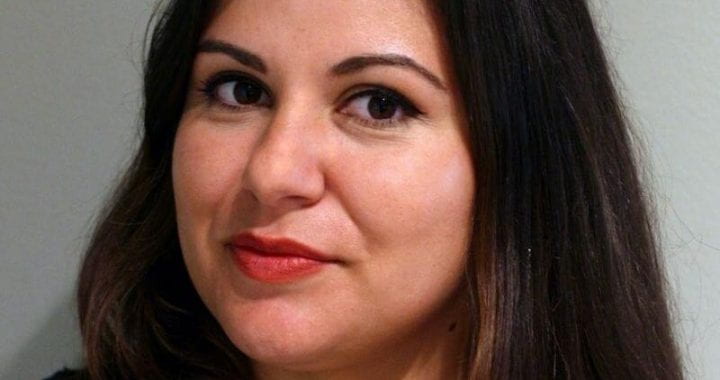
Charne Larvey

November 2 – Charne Lavery – Vertical Indian Ocean: A Cultural History of the Southern Submarine

This talk describes a new book project, an exploration of deep sea culture centred on the Indian Ocean as an ‘ocean of the south’. Drawn by the alternative histories and geography of the world of the Indian Ocean at the surface—the topic of my first book, Writing Ocean Worlds—the new book explores what possibilities exist, in this ancient and south-centred oceanic world, for apprehending, narrating and imagining what lies beneath. It aims to do so by taking as a structuring framework the ocean’s five vertical zones—the sunlight, the twilight, the midnight, the abyss, and the trenches—in the context of warming planetary seas. 

Charne Lavery is a Senior Lecturer in the Department of English at the University of Pretoria and Research Associate based at WISER, University of the Witwatersrand, South Africa. She explores ocean writing of the global South in a time of environmental change. Her first monograph, Writing Ocean Worlds: Indian Ocean Fiction in English, appeared in 2021. With Isabel Hofmeyr, she co-directs the Oceanic Humanities for the Global South

Date | Time
November 2, 2022 | 12:15 – 1:30 PM [PST]
Free and open to the public

Venue | Location 
Humanities Building 1, Room 210
University of California, Santa Cruz
November 9 – Mark Fathi Massoud – The Power of Positionality

This talk investigates the benefits and burdens of positionality, or the disclosure of how an author’s racial, gender, class, or other self-identifications, experiences, and privileges influence research methods. A statement of positionality in a research article can enhance the validity of its empirical data and its theoretical contribution. However, such self-disclosure puts scholars in a vulnerable position, and those most likely to reveal how their positionality shapes their research are women, ethnic minorities, or both. At this stage of the field’s methodological development, the burdens of positionality are being carried unevenly by a tiny minority of researchers. Drawing in part on my own empirical research and professional experience, this talk invites scholars to redress this imbalance by embracing expressions of positionality.

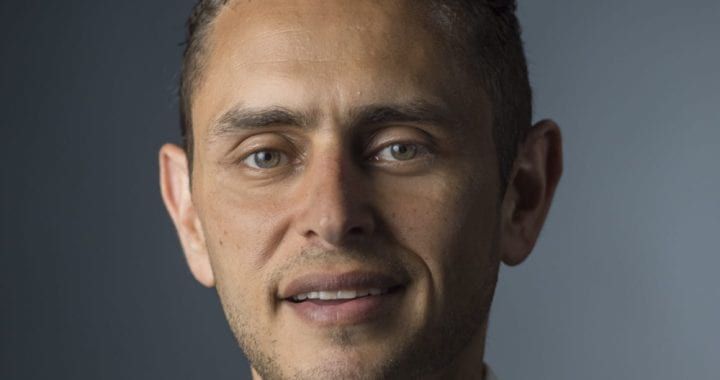
Mark Fathi Massoud is Professor of Politics and Director of the Legal Studies Program at UCSC. He is the author of two books that address the interplay of law, politics, and religion. Law’s Fragile State (Cambridge University Press 2013) won awards from the American Political Science Association and the Law and Society Association. Shari’a, Inshallah (Cambridge University Press 2021) won awards from the Socio-Legal Studies Association, the American Sociological Association, the American Political Science Association, and was a finalist for the PROSE Award for the best book in government and politics published last year, from the Association of American Publishers. He is currently editing a volume on positionality.

Date | Time
November 9, 2022 | 12:15 – 1:30 PM [PST]
Free and open to the public

Venue | Location 
Humanities Building 1, Room 210
University of California, Santa Cruz
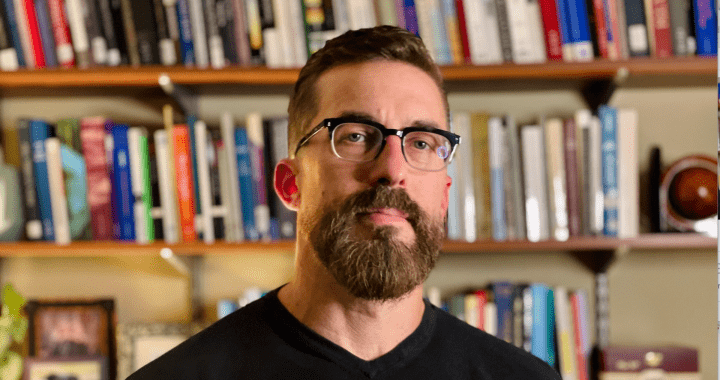
image of Dean Mathiowetz and books

(Cancelled) – November 16 – Dean Mathiowetz – Luxuriating as a Political Structure of Feeling

This talk has been cancelled and will be rescheduled for Winter 2023.

According to premodern elites, the luxurious appetites of the poor were not only feminine and exotic but also the greatest threat to social order. Popular demands for better wages, sustenance, more festival days, or any improvement in the conditions of ordinary folk were denounced as “luxury.” But scholarship about this discourse has been misdirected by premodern sumptuary laws, focusing on luxury as a class of things. I focus on the act of luxuriating instead, drawing out its embodied, affective, and tactical dimensions as a “structure of feeling.” I argue that a focus on luxuriating opens our thought to the political potential in the physical, sensory, and lived experience of the poor as they lay claim to enjoyment and abundance.

Dean Mathiowetz is Associate Professor of Politics, currently working on a book manuscript Luxuriating in Democracy, Abundance, and the Enjoyment of Bodies Politic. He is the author of Appeals to Interest: Language and the Shaping of Political Agency and the editor of and contributor to Hanna Fenichel Pitkin: Politics, Justice, and Action. His other writings have appeared in journals including Political Theory, Theory and Event, Political Research Quarterly, The New Political Science, and The Arrow.

Date | Time
November 16, 2022 | 12:15 – 1:30 PM [PST]
Free and open to the public

Venue | Location 
Humanities Building 1, Room 210
University of California, Santa Cruz
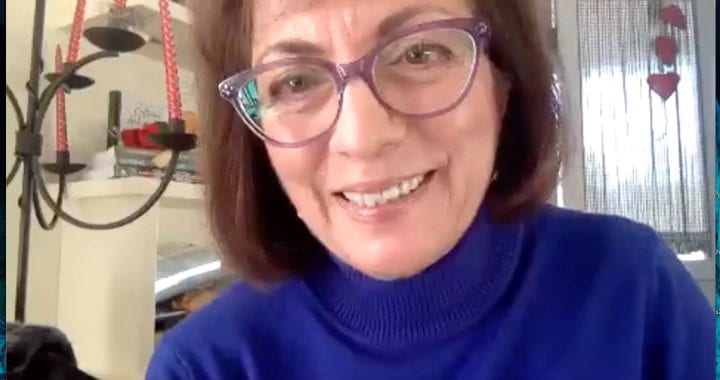
Photo of speaker Professor Seremetakis

(Cancelled) November 23 – C. Nadia Seremetakis – A Journey through Border Spaces of the Everyday

This event is co-sponsored by the Department of Anthropology

The border is the shared topos of the anthropologist, the historian, the archaeologist, the artist, the musician and the poet, as they all bring into dialogue the past and future with the present, the inside with the outside, the particular with the general, ideas with the senses. This lecture explores border and trauma spaces through a journey of antiphonic witnessing and memory as a way of (re)establishing a self-reflexive relationship with the past that changes the positioning of the present. Drawing on 30 years of conscious and unconscious fieldwork, writing, teaching and practicing multimedia public anthropology, I reflect on my own antinomic subject position in my discipline as a so called “native,” or “indigenous” ethnographer and also as a diasporic, American-trained, post-Boasian anthropologist.

C. Nadia Seremetakis is Professor of Anthropology at the University of the Peloponnese. She has written seven books in both English and Greek, including The Last Word: Women Death & Divination in Inner Mani, The Senses Still: Perception and Memory as Material Culture in Modernity, and Sensing the Everyday.

Date | Time
November 23, 2022 | 12:15 – 1:30 PM [PST]
Free and open to the public

RSVP by 11 AM on Wednesday, November 23rd; you will receive the Zoom link and password at 11:30 AM the day of the colloquium.

photo of hannah zeavin

(Cancelled) November 30 – Hannah Zeavin – Hot and Cool Mothers

This talk has been cancelled and will be rescheduled for Winter 2023.

From the mid-1940s until the 1960s and beyond, class, race, and maternal function were linked in metaphors of temperature in pediatric psychological studies of Bad Mothers. Newly codified diagnoses of aloof “refrigerator mothers” and overstimulating “hot mothers” were inseparable from midcentury conceptions of stimulation, mediation, domesticity, and race, including Marshall McLuhan’s theory of hot and cool media, as well as maternal absence and (over)presence, echoes of which continue in the present in terms like “helicopter parent.” Whereas autism and autistic states have been extensively elaborated in their relationship to digital media, this talk attends to attributed maternal causes of “emotionally disturbed,” queer, and neurodivergent children. The talk thus elaborates a media theory of mothering and parental “fitness.” 

Hannah Zeavin is a scholar, writer, and editor, and works as an Assistant Professor at Indiana University and a Visiting Fellow at the Columbia University Center for The Study of Social Difference. Zeavin is the author of The Distance Cure: A History of Teletherapy (MIT Press, 2021) and at work on her second book, Mother’s Little Helpers: Technology in the American Family (MIT Press, 2024). Articles have appeared in American Imago, differences: A Journal of Feminist Cultural Studies, Technology and Culture, Media, Culture, and Society, and elsewhere. Essays and criticism have appeared or are forthcoming from Dissent, The Guardian, Harper’s Magazine, n+1, The New York Review of Books, The New Yorker, and elsewhere. In 2021, Zeavin co-founded The Psychosocial Foundation and is the Founding Editor of Parapraxis, a new popular magazine for psychoanalysis on the left, which will be releasing its first issue in Fall 2022.

Date | Time
November 30, 2022 | 12:15 – 1:30 PM [PST]
Free and open to the public

Venue | Location
Humanities Building 1, Room 210
University of California, Santa Cruz
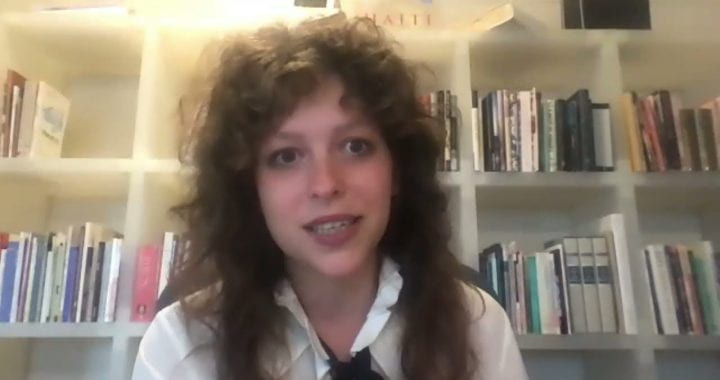
April 6 – Nasser Zakariya – Questions on “Anthroperiphery

Taking recent discussions of “Copernican Forecasting” as a point of departure, this talk will look to historical and probabilistic arguments representing science in terms of ongoing demonstrations of the increasingly marginal position of humanity. A sketch of some of the genealogies of these arguments and their representations suggest how ill-fitting they might be when set against varying historical conceptions of centrality, probability, and forecasting.

Date | Time
April 6, 2022 | 12:15 – 1:30 PM [PST]

RSVP by 11 AM on Wednesday, April 6th; you will receive the Zoom link and password at 11:30 AM the day of the colloquium.

To RSVP for the entire Spring 2022 series, please fill out this form.

photo of hannah zeavin

(Cancelled) April 13 – Hannah Zeavin – Hot and Cool Mothers

This event has been cancelled due to illness and will be rescheduled for Fall 2022.

“Hot and Cool Mothers” moves toward a media theory of mothering and parental “fitness.” The article begins with an investigation into midcentury pediatric psychological studies on Bad Mothers and their impacts on their children. The most famous, if not persistent, of these diagnoses is that of the so-called refrigerator mother. The refrigerator mother is not the only bad model of maternality that midcentury psychiatry discovered, however; overstimulating mothers, called in this study “hot mothers,” were identified as equally problematic. From the mid-1940s until the 1960s and beyond, class, race, and maternal function were linked in metaphors of temperature. Whereas autism and autistic states have been extensively elaborated in their relationship to digital media, this article attends to attributed maternal causes of “emotionally disturbed,” queer, and neurodivergent children. The author argues that these newly codified diagnoses were inseparable from midcentury conceptions of stimulation, mediation, domesticity, and race, including Marshall McLuhan’s theory of hot and cool media, as well as maternal absence and (over)presence, echoes of which continue in the present in terms like “helicopter parent.”

Hannah Zeavin is the author of The Distance Cure: A History of Teletherapy (MIT Press, 2021) and at work on her second book, Mother’s Little Helpers: Technology in the American Family (MIT Press, expected 2023). She teaches in the Departments of History and English at UC Berkeley.

Date | Time
April 13, 2022 | 12:15 – 1:30 PM [PST]

RSVP by 11 AM on Wednesday, April 13th; you will receive the Zoom link and password at 11:30 AM the day of the colloquium.

To RSVP for the entire Spring 2022 series, please fill out this form.

April 20 – Brandi Thompson Summers – Spatial Temporalities: The Future-Pasts of Black Dispossession

In this talk, Dr. Summers explores the history of unhoused populations in Oakland, the cyclical displacements of Black locals, and the appearance and reappearance of parking lots in these stories of disruption. She tells the story of West Oakland, in particular, as a testing ground for speculative urbanism–an urbanism based not in speculator’s profit or the spectacles of a city’s self-branding, but in the utopian and dystopian possibilities that unfold in an ongoing (implicitly and explicitly racialized) housing emergency.

Brandi T. Summers, PhD is assistant professor of Geography at UC Berkeley, and is founding co-director of the Berkeley Lab for Speculative Urbanisms. Her research examines the relationship between and function of race, space, urban infrastructure, and architecture. Her book, Black in Place: The Spatial Aesthetics of Race in a Post-Chocolate City (UNC Press, 2019), explores how competing notions of blackness organize efforts to structure economic relations and develop land in gentrifying Washington DC. Her current book project explores the roots and routes of Black resistance that laid a foundation for the current affective economies organized to reclaim space through public cultures, politics, and the aesthetics of Black life in her hometown, Oakland, California. Dr. Summers has published several articles and essays that analyze the relationship between race, power, aesthetics, and urbanization that appear in both scholarly and popular publications, including New York Times, The Boston, Globe, Places Journal, and Antipode.

Date | Time
April 20, 2022 | 12:15 – 1:30 PM [PST]

RSVP by 11 AM on Wednesday, April 20th; you will receive the Zoom link and password at 11:30 AM the day of the colloquium.

To RSVP for the entire Spring 2022 series, please fill out this form.

April 27 – Michelle C. Velasquez-Potts – Force-Feeding and the Suspended Animation of Torture

Since 2002, prisoners at Guantánamo Bay detention camp have been force-fed as punishment for hunger striking, prompting the question of how to understand the feeding tube’s various uses as both a form of medical treatment and torture instrument. By placing force-feeding practices at Guantánamo Bay within a larger history of medicalized punishment, this talk tracks how the functions of the feeding tube are altered and reimagined by the US military. The talk also explores end-of-life politics at Guantánamo Bay by investigating the recent possibility of palliative care for aging prisoners at the camps. I consider how the military’s plans for hospice is made possible by humanitarian logics of war that continue to centralize care in similar ways to that of force-feeding.

Michelle Velasquez-Potts is an educator and writer working at the intersections of feminist and queer thought. Broadly, her work attempts to imagine more relational ways of approaching questions of state violence and punishment. Her first book project, Suspended Animation, focuses on the relationship between medicine and punishment, and in particular the rise of force-feeding post-9/11. She has published essays in Women and Performance, Public Culture, Captive Genders: Trans Embodiment and the Prison Industrial Complex, Abolition Journal, and Art Journal Open.

Date | Time
April 27 | 12:15 – 1:30 PM [PST]

RSVP by 11 AM on Wednesday, April 27th; you will receive the Zoom link and password at 11:30 AM the day of the colloquium.

To RSVP for the entire Spring 2022 series, please fill out this form.

May 4 – Filippo Gianferrari – Dante and Boccaccio vs. Medieval Education: A Lesson in Cross-cultural Pastoral

Readers have always been fascinated by Dante’s distinctive habit of placing episodes from Scripture side by side with ancient pagan myths, as though the latter had a comparable authority. As my reading shows, a popular medieval school text, known as the Eclogue of Theodulus (Ecloga Theoduli), supplied a fitting precedent and model for this practice and might have suggested some specific series of examples that Dante stages in his Purgatorio. By constructing a system of parallel mythological and biblical examples, the Ecloga Theoduli featured a syncretic account of universal history that suggested mythology was a prefiguration of the events recounted in the Bible. Whereas the Ecloga depicts a clash between Christian and pagan cultures, however, dismissing the latter as a lie, Dante harmonizes the two traditions, providing a syncretic program for the moral instruction of the Christian reader. Although the Purgatorio’s syncretic discourse constituted a remarkable innovation, which exerted long-lasting influence on later authors, it nonetheless retained some of the cultural limitations imposed by the Ecloga—as, for instance, in the representation of Virgil’s inability to cross the river Lethe in Eden. The chapter goes on to argue that first in Paradiso 19 and then in his last work, the second Egloga to Giovanni del Virgilio, Dante obliquely criticizes the Ecloga Theoduli’s condemnation of ancient poetic wisdom. The case of the Ecloga, therefore, well encapsulates Dante’s conflicting attitude toward his own education. The paper ends by showing that Boccaccio’s eclogue Olympia (Buccolicum Carmen 14) provides a sophisticated parody and refutation of the Ecloga Theoduli that takes as its model and interlocutor Dante’s wrestling with the same text in his own oeuvre.

Filippo has been part of the Literature Department at UCSC since 2019. He works on Dante, Petrarch, Boccaccio and lay education in the Middle Ages and the Renaissance. He is interested in the ways literature and education (particularly literacy) intersect with and inform each other. He has published mostly on the topic of Dante’s intellectual formation and is currently writing a book provisionally titled “Training the Reader: Dante and the Rise of Vernacular Literacy.” The book investigates Dante’s debts to his earliest scholastic readings and his critical stance toward contemporary education.

Date | Time
May 4, 2022 | 12:15 – 1:30 PM [PST]

RSVP by 11 AM on Wednesday, May 4th; you will receive the Zoom link and password at 11:30 AM the day of the colloquium.

To RSVP for the entire Spring 2022 series, please fill out this form.