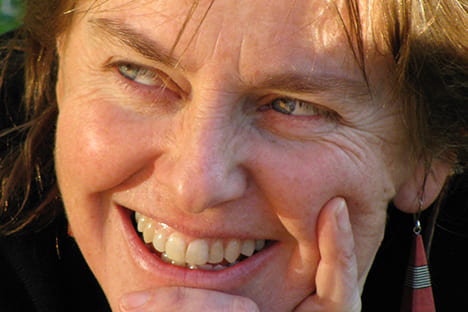
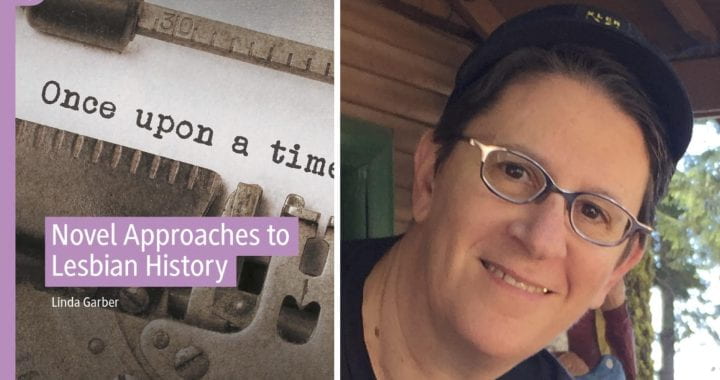
Prof. Garber and an image of book cover "Once Upon a Time"

February 1 – Linda Garber – The Present in Our Past: Reading Lesbian Historical Fiction

Join us for a guided tour of the pleasures and perils of lesbian historical fiction, as Linda Garber (author of Novel Approaches to Lesbian History) introduces the thrilling and heart-wrenching adventures, trenchant theoretical insights, and critical political shortcomings of novels that establish a historical footing for contemporary lesbian identity in the face of a problematic, mostly silent, archive.  She’ll cover genres ranging from westerns (Tomboys and Indians) and pirate tales (Unsafe Seas for Women) to the postmodern (Haunting the Archives) and the erotic (Everything You Always Wanted to Know about Lesbian Sex), while calling for an intersectional, trans-inclusive lesbian literature and history.

Linda Garber is Associate Professor of Women’s and Gender Studies at Santa Clara University, where she teaches queer literature and film, and feminist and queer theory.  Her book Novel Approaches to Lesbian History was published by Palgrave in 2021 and is now available in paperback.  Her earlier books include Identity Poetics: Race, Class, and the Lesbian-Feminist Roots of Queer Theory and the anthology Tilting the Tower: Lesbians / Teaching / Queer Subjects.

Date | Time
February 1, 2023 | 12:15 – 1:30 PM [PST]
Free and open to the public

Venue | Location 
Humanities Building 1, Room 210
University of California, Santa Cruz

RSVP by 11 AM on Wednesday, February 1, you will receive the Zoom link and password at 11:30 AM the day of the colloquium.
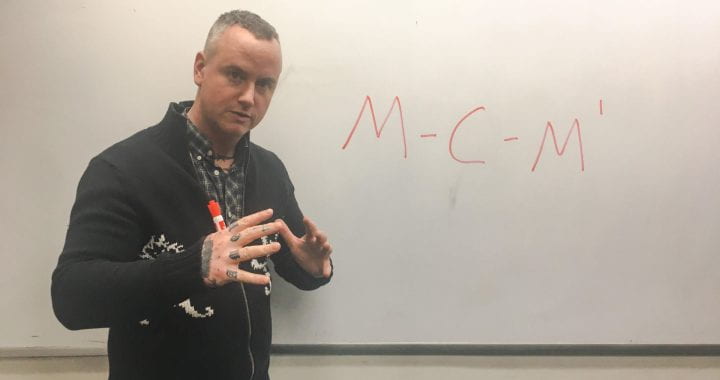
Prof. Shanahan explaining Marx's general theory of capitalist production.

February 8 – Jarrod Shanahan – Skyscraper Jails

How did a campaign to end the humanitarian catastrophe of New York City’s Rikers Island penal colony culminate in the planned creation of skyscraper jails across the city, with no closure of Rikers in sight? The tragic story of recent jail reform efforts in New York City is at once novel, and indicative of broader trends in “humanitarian” jail reform, growing activism big big philanthropy in the supposed reform of mass incarceration, and the evolution of non-profit organizations promoting the extension of the carceral state — all conducted under the auspices of “social justice.” Tracing the contours of this new moment of carceral boosterism, Dr. Jarrod Shanahan will present on a work in progress, Skyscraper Jails, co-authored with criminal justice scholar Dr. Zhandarka Kurti. This work draws from extensive archival research, years of collaborative scholarship, and participation in the campaign against the new jails.

Jarrod Shanahan is an activist-scholar and Assistant Professor of Criminal Justice at Governors State University in University Park, IL. He is the author of Captives: How Rikers Island Took New York City Hostage (Verso, 2022), co-author with Zhandarka Kurti of States of Incarceration: Rebellion, Reform, and America’s Punishment System (Field Notes/Reaktion, 2022), and an editor of Treason to Whiteness is Loyalty to Humanity (Verso, 2022), a Noel Ignatiev reader.

Date | Time
February 8, 2023 | 12:15 – 1:30 PM [PST]
Free and open to the public

Venue | Location
Humanities Building 1, Room 210
University of California, Santa Cruz

RSVP by 11 AM on Wednesday, February 8, you will receive the Zoom link and password at 11:30 AM the day of the colloquium.
 

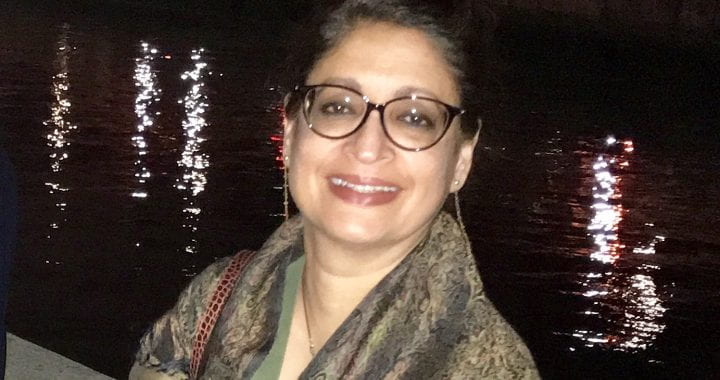
Prof. Ganguly in front of a watery background

February 15 – Keya Ganguly – Reason and the Image: On Satyajit Ray’s Shatranj Ke Khilari (The Chess Players)

This talk focuses on Satyajit Ray’s cinematic treatment of an episode from India’s late colonial history in Shatranj Ke Khilari (“The Chess Players,” 1977). Through his portrayal of the betrayal of reason under the pretext of law, Ray makes an appeal on behalf of the visual image as a critique of reason rather than its lure.

Keya Ganguly is Professor in the Department of Cultural Studies and Comparative Literature at the University of Minnesota. She is the author of States of Exception: Everyday Life and Postcolonial Identity (2001) and Cinema, Emergence, and the Films of Satyajit Ray (2010). She served as Senior Editor of Cultural Critique from 1998-2010, and her essays have appeared in Cultural Studies, New Formations, Race and Class, South Atlantic Quarterly, and History of the Present. Recent and forthcoming essays have explored Mahasweta Devi’s radical politics, the aesthetics of exile, and world cinema in dialectical perspective. She is currently writing a book on the revolutionary utopianism of the early Indian nationalist Aurobindo Ghose entitled Political Metaphysics.

Date | Time
February 15, 2023 | 12:15 – 1:30 PM [PST]
Free and open to the public

Venue | Location 
Humanities Building 1, Room 210
University of California, Santa Cruz

RSVP by 11 AM on Wednesday, February 15, you will receive the Zoom link and password at 11:30 AM the day of the colloquium.
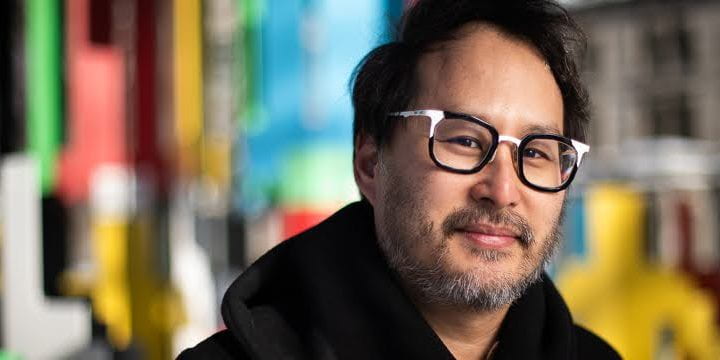
Prof. So in front of a blurred colorful background

February 22 – Richard Jean So – How #BLM Became a Story: Black Fiction in the Age of Platform Capitalism

Event co-sponsored with Kresge College, Media and Society Lecture Series and the Departments of  Literature and Critical Race and Ethnic Studies.

New online writing platforms, like Wattpad, are massively popular (100 million registered users upload ~300,000 stories per day), and with their focus on user generated content and open access, promise to democratize contemporary cultural production. This talk explores how such platforms represent and accommodate Blackness, specifically examining the rise of a new genre category of writing: the #BLM story, over the past five years. Using a mixture of critical and computational methods, and drawing from critical race theory and platform studies, I ask: what textual features define this story, how do such features evolve over time, and how does this story differ from previous iterations of racial protest literature? Also: are such stories able to thrive on such platforms – what is their relationship to platform capitalism?

Richard Jean So is Associate Professor of English and Digital Humanities at McGill University. He focuses on computational and data-driven approaches to contemporary literature and culture, with a particular interest in race and inequality. His most recent book is Redlining Culture: A Data History of Racial Inequality and Postwar Fiction, and he is at work on a new project called Fast Culture, Slow Justice: Race and Writing in the Platform Age. He has published in both academic journals like Critical Inquiry and PMLA and popular periodicals, such as The New York Times and The Atlantic.

Date | Time
February 22, 2023 | 12:15 – 1:30 PM [PST]
Free and open to the public

Venue | Location 
Humanities Building 1, Room 210
University of California, Santa Cruz

RSVP by 11 AM on Wednesday, February 22, you will receive the Zoom link and password at 11:30 AM the day of the colloquium.
Prof. El Aris in front of building

March 1 – Tarek El-Ariss – The Fallen Note: A Journey to the Birthplace of the Image

This event is sponsored by The Humanities Institute, UC Santa Cruz

This talk begins with a discovery – an old faded photocopy that fell off from my copy of Derrida’s Specters of Marx as I was moving offices in 2020. The photocopy was of a page in the Diagnostic and Statistical Manual of Mental Disorders (DSM) describing a condition wherein patients experience parasites or insects infesting their surroundings and crawling on their skin. Where did this note come from? How did it find its way to that book in particular? And was its revelation during an office move at the height of Covid an accident, a coincidence, or a message from another time and place and experience? I investigate the provenance of this note, embarking on a journey that leads me to the birthplace of the image and photocopying technology with companies such as Xerox and Kodak in Upstate NY. It also leads me to confront the ghosts and monsters of the Lebanese Civil War (1975-90) that crawl into suitcases and possess tightly packed books and items of clothing as they cross oceans and go up rivers and canals. In the process, I reflect on hauntology and theory more generally, questioning its potential as a system of meaning that can access the past and reveal the hidden.

Tarek El-Ariss is an author, a scholar, and the James Wright Professor at Dartmouth College, where he teaches Middle Eastern Studies and Comparative Literature. Born and raised in Beirut during the Civil War (1975-1990) and trained in philosophy, literary theory, and visual and cultural studies, his work deals with questions of displacement, modernity, and the somatic in literature and culture. He has written about disoriented travelers, outcasts, queers, hackers, and characters with complicated relations to home, tribe, nation, and power. He is the author of Trials of Arab Modernity: Literary Affects and the New Political (2013) and Leaks, Hacks, and Scandals: Arab Culture in the Digital Age (2019), and editor of The Arab Renaissance: A Bilingual Anthology of the Nahda (2018). In 2021, he received a Guggenheim Fellowship to complete a forthcoming book entitled, “Homo Belum: An Autobiography of War.”

Date | Time
March 1, 2023 | 12:15 – 1:30 PM [PST]
Free and open to the public

Venue | Location
Humanities Building 1, Room 210
University of California, Santa Cruz

RSVP by 11 AM on Wednesday, March 1, you will receive the Zoom link and password at 11:30 AM the day of the colloquium.
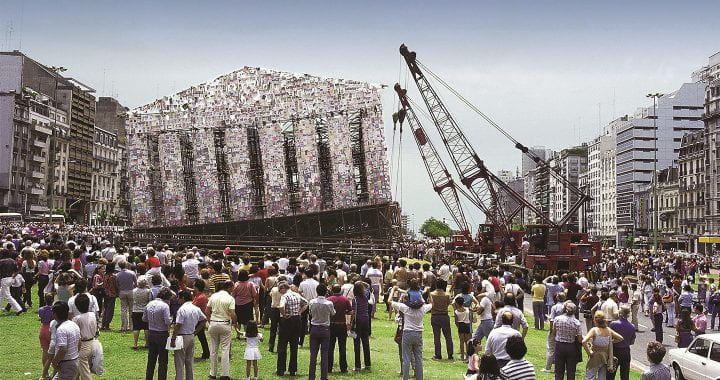
Marta Minujín, "Partenón de libros" (Buenos Aires, 1983)

March 8 – Zac Zimmer – An Internet Built of Books

On the Internet, the book is a drag: a literal metaphor that pulls us back to the material world.  This talk focuses on three examples of the book-object’s material drag on the supposed ephemeral nature of online existence in the digital cloud: 1) Philip Zimmermann and MIT Press’ PGP Source Code and Internals (1995), a printed edition of the source code that forms the basis of all email cryptography; 2) William Gibson’s self-destructing cyberpoem Agrippa (1992), a literary work that uses pseudo-cryptography to subvert print culture and which, by producing an art object consumed (annihilated, even) within its readin—g, recovers a lyrical past against the drag of the future; and 3) The Wu-Tang Clan’s single-copy album Once Upon a Time in Shaolin (2015), which by subverting the democratic nature of art, works against the drag of a speculative art market. The moral of each of these bookworks resides within the materiality of the object. What makes these three examples illustrative is that they all deal—in one way or another—with cryptography. In other words: the book’s secret, which is, in the end, nothing other than the book’s inescapable materiality, even in the digital era.

Zac Zimmer is Associate Professor of Literature at UCSC. His research focuses on the interdisciplinary study of literature, culture and technology in the hemispheric Americas. In addition to his current research on the infrastructure of technosystems, he co-facilitates the Ethics & Astrobiology reading group, part of UCSC’s Astrobiology Initiative. His book First Contact: Speculative Visions of the Conquest of the Americas is forthcoming.  

Date | Time
March 8, 2023 | 12:15 – 1:30 PM [PST]
Free and open to the public

Venue | Location 
Humanities Building 1, Room 210
University of California, Santa Cruz

RSVP by 3PM on Tuesday, March 7, you will receive the Zoom link and password by 5 PM the day before the colloquium. Please note, the RSVP window has been adjusted this week only.

Image: Marta Minujín, “Partenón de libros” (Buenos Aires, 1983). Reproduced with permission from the artist’s estate

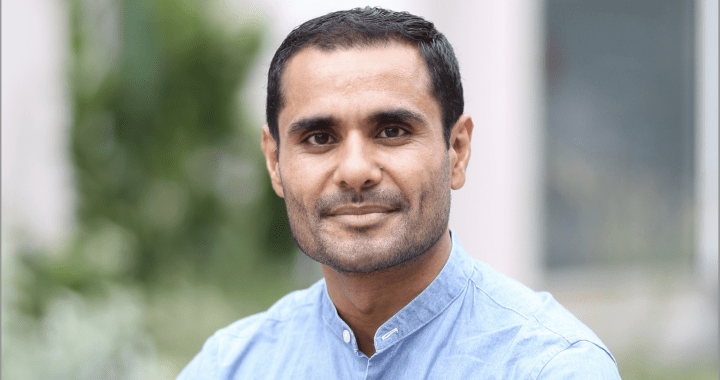
photo of speaker Nidhi Mahajad

October 5 – Nidhi Mahajan – A Burning Sea: Arbitrage and a Fractured Moral Economy in the Persian Gulf

Wooden sailing vessels or dhows have long traversed The Indian Ocean, making it what some scholars have called “the cradle of globalization.” Today, dhows or vahans from Kachchh in western India continue along old Indian Ocean routes as crucial intermediaries in global shipping. This talk traces how this mobile trade network is anchored or moored in specific places and economic concepts in some moments, and unmoored in others. Focusing on arbitrage, long a strategy used by Indian Ocean merchants, I argue that value in the contemporary dhow trade is created through a fractured moral economy. Tracing the movement of one dhow across the Indian Ocean during the COVID-19 pandemic, I argue that sanctions regimes, and questions of jurisdiction at sea in the Persian Gulf have created a geopolitical climate in which value is produced at multiple scales through the intersection of these logics, the body of the sailor becoming the site for capturing value and crafting sovereignty at sea.  

Nidhi Mahajan is Assistant Professor of Anthropology at UCSC. Her research focuses on the intersection between political economy, sovereignty, and mobility in the Indian Ocean. A practicing artist, she has also developed multi-media exhibitions in Kenya, India, and the UAE. Her work has appeared in Comparative Studies of South Asia, Africa, and the Middle East; Island Studies Journal, and the edited volumes Reimaging Indian Ocean Worlds and World on the Horizon

Date | Time
October 5, 2022 | 12:30 – 1:45 PM [PST]
Free and open to the public

Venue | Location 
Humanities Building 1, Room 210
University of California, Santa Cruz

Please note that this talk will start at 12:30 rather than 12:15 to accommodate the History of Consciousness job talk by Dimitris Papadopoulos, “The Chemical Milieu. Chemistry, Ecology and Social Change,” from 11:00-12:30 in Humanities 420. We understand that some of you will not be able to attend due to the Yom Kippur holiday and apologize for the cross-scheduling.

photo of speaker, Louise Meintjes

October 12 – Louise Meintjes – Giving Voice to a Politics of Breath

This event is co-sponsored by the Departments of Music and Anthropology

This paper draws on long term ethnographic study of South African Zulu song and dance traditions. It revisits instances of ngoma vocal performance in order to explore the sonics and concept of the sound of breath, and connects that to popular political expression in the USA during the global turbulence of the last two and a half years.

Louise Meintjes is the Marcello Lotti Professor of Music and Cultural Anthropology at Duke University. She has worked as an ethnographer in Johannesburg and rural KwaZulu Natal for three decades, authoring Sound of Africa!: Making Music in a South African Studio (Duke UP, 2003) and Dust of the Zulu: Ngoma Aesthetics after Apartheid (Duke UP 2017), which won the Gregory Bateson and Alan Merriam prizes.

Date | Time
October 12, 2022 | 12:15 – 1:30 PM [PST]
Free and open to the public

Venue | Location 
Humanities Building 1, Room 210
University of California, Santa Cruz

photo of Tahir Amin

October 19 – Tahir Amin – Technological Colonialism: The Political Economy of Innovation and Global Health

This event is co-sponsored by the Mellon Sawyer Seminar on “Race, Empire, and the Environments of Biomedicine”

With billions of people in low-income countries still without Covid-19 vaccines and therapeutics, this pandemic has exposed the neo-colonial structures of the political economy of intellectual property system and the World Trade Organization (WTO). This talk will delve into an often overlooked history of how the WTO TRIPS Agreement came into existence and the impact it has had on the global South over the 27 years it has been in force – and how it will impact future pandemic preparedness and climate change.

Tahir Amin is a founder and executive director of the Initiative for Medicines, Access & Knowledge (I-MAK), a nonprofit organization working to address structural inequities in how medicines are developed and distributed. He has over 25 years of experience in intellectual property (IP) law, during which he has practiced with two of the leading IP law firms in the United Kingdom and served as IP Counsel for multinational corporations. His work with I-MAK focuses on re-shaping IP laws and the political economy of ‘innovation’ to better serve the public interest by changing the structural power dynamics that allow health and economic inequities to persist. He has served as legal advisor/consultant to many international groups, including the European Patent Office and World Health Organization, and has testified before Congress on the role of IP in rising drug prices. He is a former Harvard Medical School Fellow in the Department of Global Health & Social Medicine and was a 2009 TED Fellow.

Date | Time
October 19, 2022 | 12:15 – 1:30 PM [PST]
Free and open to the public

Venue | Location 
Humanities Building 1, Room 210
University of California, Santa Cruz

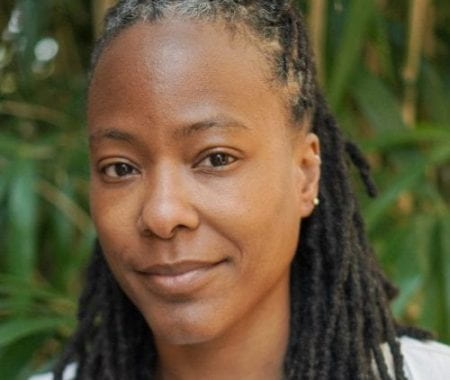
photo of speaker Grace L Sanders Johnson in front of greenery

October 26 – Grace L. Sanders Johnson – Archive as Offering

This event is co-sponsored by the Departments of Feminist Studies, History, Critical Race and Ethnic Studies, and the Center for Racial Justice

This talk names the layered applications, quotidian quality, and refusals of physical, psychological, and archival violence against Haitian women during the US occupation (1915-1934). Told alongside the story of a teenage girl’s life and death, the talk ultimately considers experimental historical practices as an opportunity to intervene in the presumed teleology of Black women’s lives through the practice of archival offering.  

Grace L. Sanders Johnson is a historian, visual artist, and assistant professor of Africana Studies at the University of Pennsylvania. Her areas of study include modern Caribbean history, transnational feminisms, oral history, and environmental humanities. Her most recent work can be found in several journals including Small Axe: A Caribbean Journal of Criticism (2022), American Anthropologist (2022), and Caribbean Review of Gender Studies (2018). Her book White Gloves, Black Nation: Women, Citizenship, and Political Wayfaring in Haiti is forthcoming (University of North Carolina Press, 2023).

Date | Time
October 26, 2022 | 12:15 – 1:30 PM [PST]
Free and open to the public

Venue | Location 
Humanities Building 1, Room 210
University of California, Santa Cruz

Followed by Archive, History, Memory: A Conversation with Grace L. Sanders Johnson and Gina Athena Ulysse 4:00 – 5:30 PM [PST] in Humanities 202